Geopolitical Conflict and LNG Reliance Disrupt European Gas Storage Economics
Traditional seasonal storage strategies are failing as Middle East instability and a structural shift toward LNG redefine market incentives.
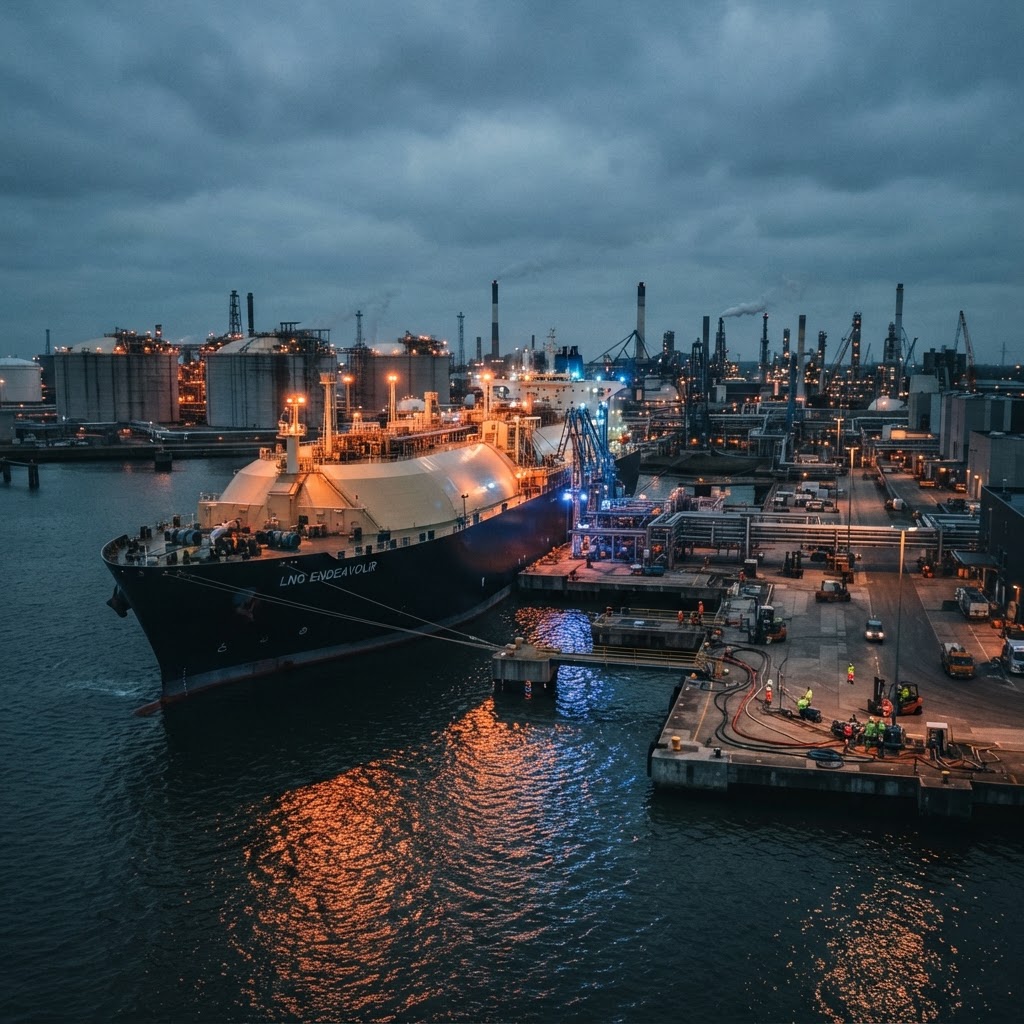
The traditional European energy model—which relies on purchasing gas during the summer to build reserves for the winter—is undergoing a profound transformation. Driven by the ongoing conflict in the Middle East and the effective closure of the Strait of Hormuz, the continent's energy security is no longer dictated by predictable seasonal price fluctuations. Instead, geopolitical instability has created a volatile environment where the standard economic incentives for storage injection have largely evaporated.
Historically, traders profited from the price spread between cheaper summer gas and more expensive winter contracts. However, recent market data indicates that this spread has flattened or even turned negative, removing the commercial motivation to fill storage sites. As a result, Europe has entered the latter half of 2026 with record-low storage levels, leaving the region increasingly vulnerable to supply shocks as the heating season approaches.
Liquefied Natural Gas (LNG) has now become the primary pillar of Europe's energy supply, accounting for over 60% of total imports. Yet, this reliance on global LNG markets has introduced new risks. With major exporters in the Persian Gulf facing severe transit disruptions, Europe is now forced to compete directly with Asian economies for a limited pool of available cargoes. This intense global competition for spot shipments has made the task of replenishing reserves significantly more expensive and logistically complex.
Recognizing the severity of the supply crunch, the European Commission has adjusted its regulatory stance, allowing member states to target lower storage thresholds than the previously mandated 90%. Despite these policy interventions, analysts warn that the continent remains in a precarious position. The shift away from pipeline-dependent models toward a globalized LNG-centric strategy has fundamentally broken the old economic rules, forcing policymakers to prioritize immediate energy availability over long-term market efficiency.
RELATED DISPATCHES


Discussion (0)
No comments yet. Be the first to join the discussion.