AI Infrastructure Surge Acts as Economic Buffer for Asia
Robust demand for semiconductor technology helps regional markets navigate corporate earnings volatility and global uncertainty.
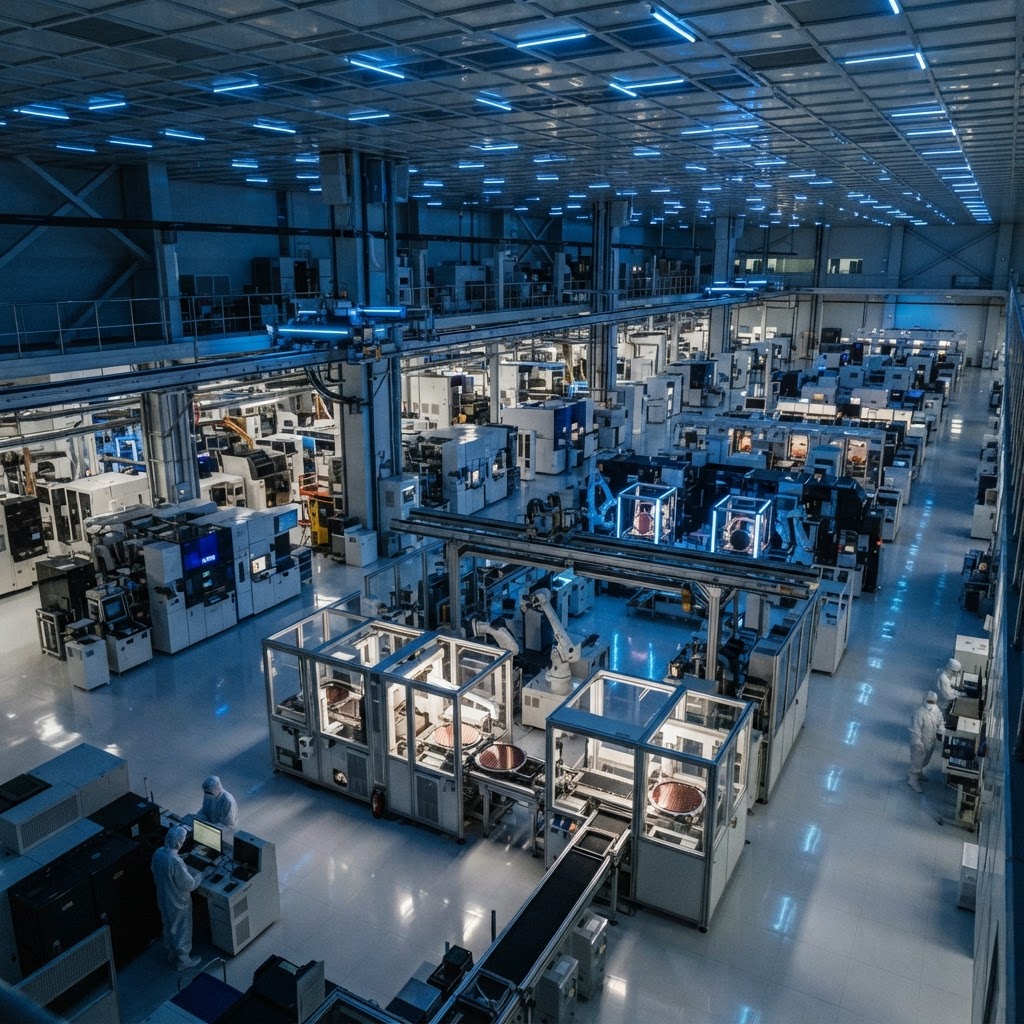
The rapid expansion of artificial intelligence infrastructure is serving as a vital stabilizer for Asian economies, providing a necessary cushion against broader corporate earnings instability. As global tech giants continue to pour capital into data centers and advanced hardware, Asian nations positioned at the heart of the semiconductor supply chain—including South Korea, China, and Singapore—are reaping the benefits of sustained export demand. This technological momentum has proven essential in offsetting headwinds such as energy price fluctuations and geopolitical tensions.
Market analysts observe that while some sectors face near-term volatility, the AI supercycle remains a dominant driver of regional growth. By anchoring trade performance, the surge in AI-related hardware orders has allowed several Asian economies to maintain resilience even when domestic consumption or other industrial sectors show signs of softening. This export-led strength has been a recurring theme throughout 2026, helping to mitigate the impact of external shocks that might otherwise have hindered regional development.
Despite this positive outlook, experts caution that the benefits of the AI boom are not distributed uniformly across the region. Economies with deeper integration into the high-end tech manufacturing ecosystem are currently outperforming those with less exposure. Furthermore, international financial institutions have highlighted that the rapid pace of capital expenditure by global hyperscalers carries inherent risks. Should there be a sudden shift in investment sentiment or a disorderly correction in the tech sector, the downstream effects could pose challenges for regional markets heavily reliant on this specific trade flow.
Looking ahead, the focus is shifting toward the long-term sustainability of this growth. The International Monetary Fund has emphasized that while AI is currently a pillar of economic support, it is also fundamentally reshaping labor markets. Policymakers are being urged to prioritize structural reforms and workforce upskilling to ensure that the region can adapt to the evolving demands of an AI-driven economy. Balancing the immediate gains from the infrastructure boom with the need for long-term labor stability remains a critical priority for the Asia-Pacific region.
RELATED DISPATCHES


Discussion (0)
No comments yet. Be the first to join the discussion.