WomBot: The Mini Robot Squeezing Into Ararat's Hidden Cavities
A 3D-printed crawler developed with La Trobe University is carrying cameras into gaps far too narrow for a human to enter.
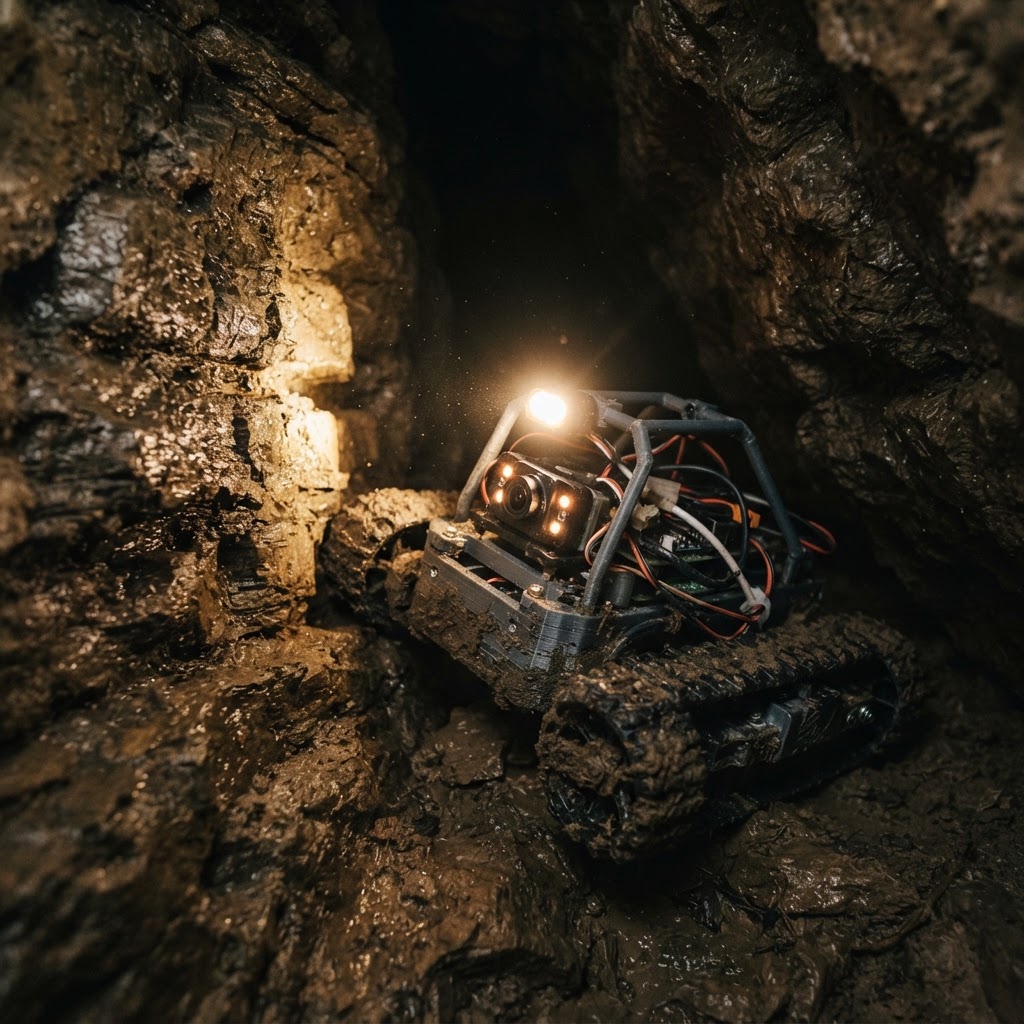
The newest member of the Noah's Ark Research Project is small enough to sit in a shoebox, and it is already doing work no human can.
The machine, a 3D-printed tracked mini robot developed with La Trobe University, has been built to crawl into narrow cavities inside the Ararat formation. With a low profile, rubber treads and onboard lighting, it can thread through gaps that would be unsafe or impossible for a person to explore, sending back live video as it goes.
Its job is narrow and specific. Inside the cavities, the robot is looking for the kind of evidence that is usually invisible from the outside: worked surfaces, cavities that continue further than the geology suggests they should, archaeological traces, and even the wildlife that has made the structure its home.
Robotics has become an increasingly common tool at difficult archaeological sites because it answers the problem of access. A cavity that is too tight, too unstable or too deep to inspect safely is exactly where a small machine earns its keep.
The limits are real. A robot carries a small camera and a short battery, and it cannot judge context the way a field archaeologist can. Its footage becomes evidence only after specialists interpret it.
For now, the mini crawler is extending the team's eyes into places the project has never been able to see. Whatever it finds there will be added to a picture that is still being assembled.
RELATED DISPATCHES

Discussion (0)
No comments yet. Be the first to join the discussion.