When the rains fail: Preparing for drought in Central America
Severe El Niño conditions are devastating harvests and threatening food security across the region's vulnerable Dry Corridor.
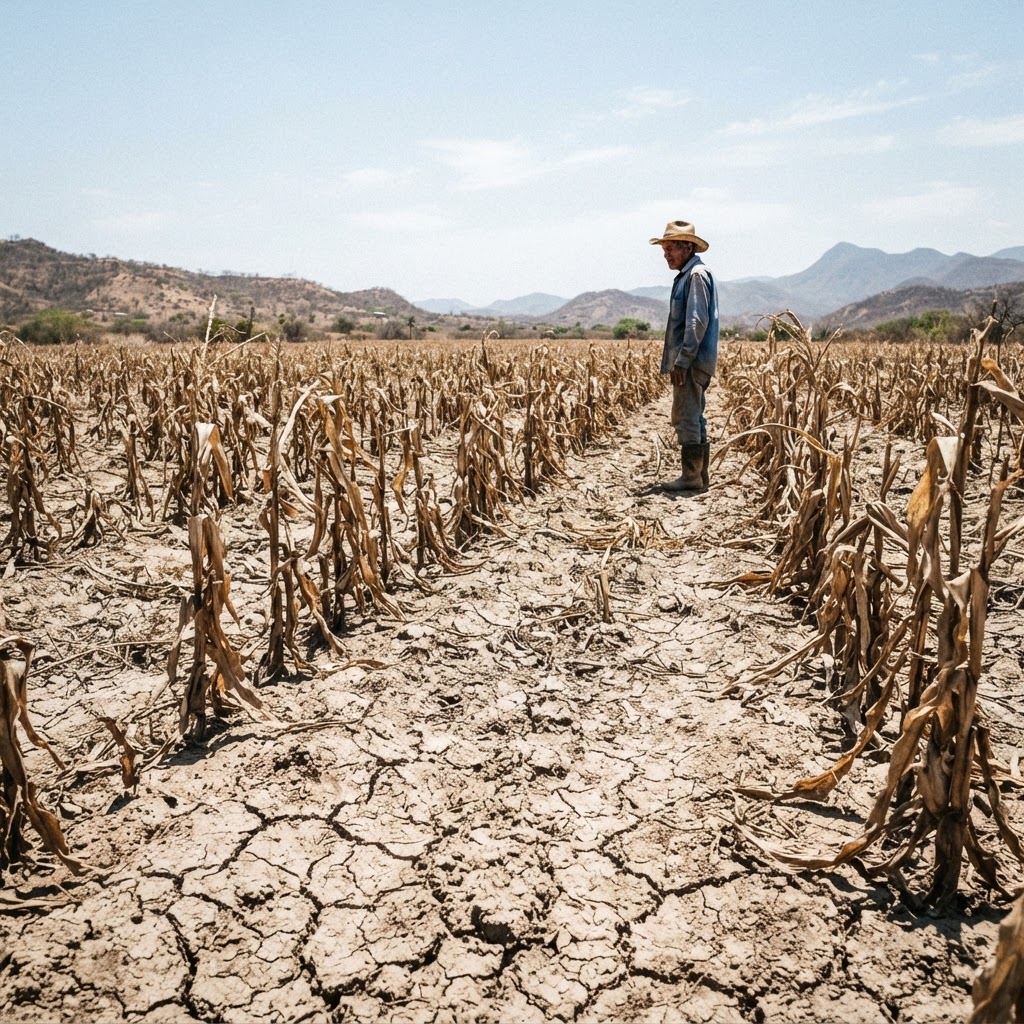
Central America is currently grappling with a severe climate crisis as the El Niño phenomenon triggers prolonged heat waves and erratic rainfall. The region's agricultural heartland, known as the Dry Corridor, has been hit particularly hard, with many areas receiving less than 60 percent of their historical average rainfall since mid-2026. This lack of water has disrupted the critical flowering and grain-filling stages for staple crops like maize and beans, leading to widespread harvest failures.
Recent assessments indicate that the impact on rural livelihoods is profound. In parts of Guatemala, Honduras, and El Salvador, nearly 80 percent of maize-growing households have reported losing the vast majority of their crops. With food reserves for many families expected to last only a few weeks, the region faces a deepening food security crisis that is likely to intensify through the 2027 lean season. The situation is further complicated by rising costs for fuel and staple foods, which place additional strain on already impoverished rural communities.
In response to these mounting threats, international agencies and local governments are shifting toward anticipatory action. By utilizing advanced weather forecasting, organizations like the UN are attempting to release funding and resources before the worst impacts occur. This proactive approach includes the distribution of drought-resistant seeds, the repair of community water systems, and the establishment of local grain banks to ensure families have access to food without needing to travel long distances or pay inflated market prices.
Despite these efforts, the outlook remains challenging. With El Niño expected to persist into 2027, experts warn that the region must continue to prioritize climate adaptation. Building long-term resilience—through improved irrigation, diversified farming practices, and robust social safety nets—is essential to protect vulnerable populations from the recurring cycle of drought and crop loss that threatens the stability of the entire region.
RELATED DISPATCHES



Discussion (0)
No comments yet. Be the first to join the discussion.