Trump's Trilateral Summit Yields Little Substance
Despite high-profile optics in Shenzhen, the meeting between Trump, Xi, and Putin failed to produce concrete progress on nuclear arms or global conflicts.
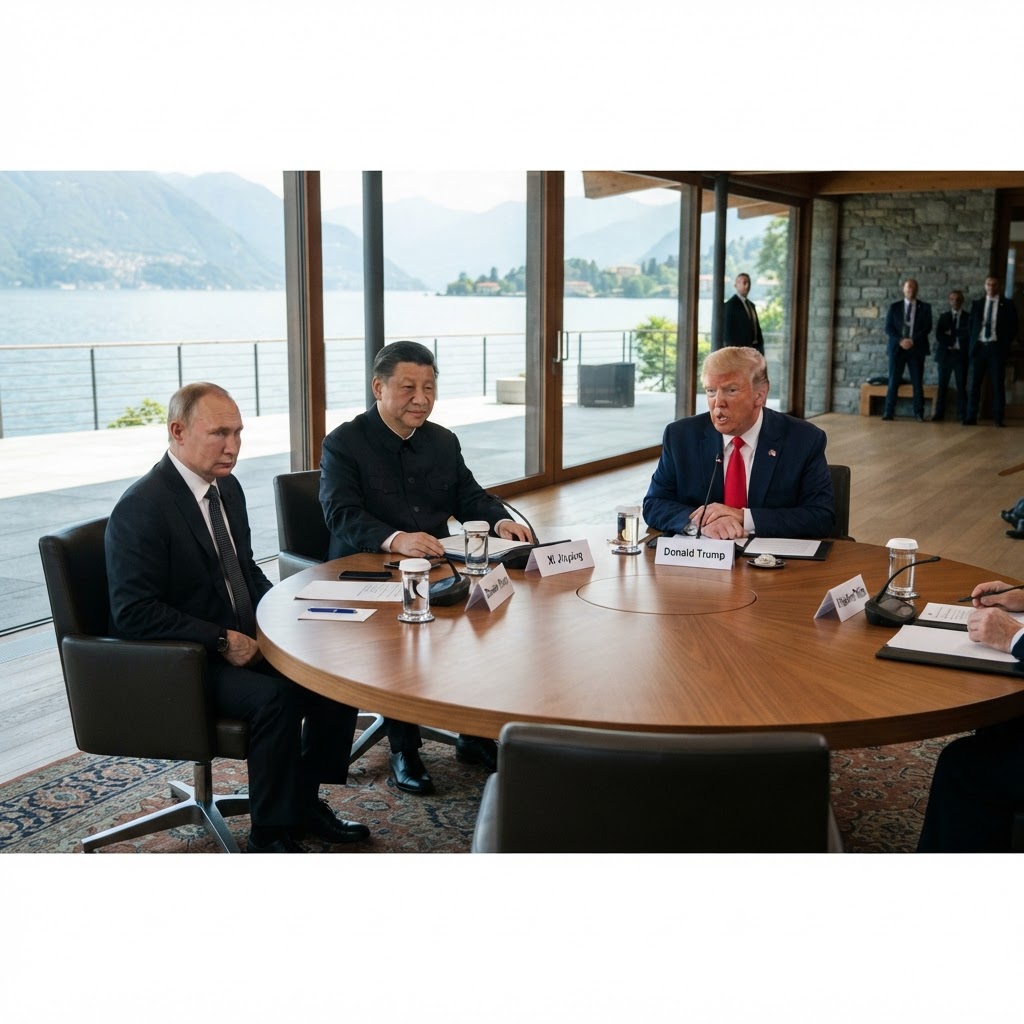
President Donald Trump’s highly anticipated three-way summit with Chinese President Xi Jinping and Russian President Vladimir Putin concluded in Shenzhen with minimal tangible results. While the leaders gathered at a lakeside villa to project an image of diplomatic cooperation, the session failed to move the needle on critical issues such as nuclear non-proliferation, the ongoing war in Ukraine, or the regulation of artificial intelligence. Analysts noted that the event functioned more as a theatrical display of power than a productive negotiation.
Trump had entered the summit with the stated goal of securing a new framework for nuclear arms control, hoping to bring China into a pact similar to the expired New START treaty. However, his counterparts showed little appetite for such constraints. While the three leaders issued a vague peace declaration affirming that nuclear war should be avoided, the document lacked any binding commitments or specific mechanisms to reduce existing arsenals. For China, which maintains a significantly smaller nuclear stockpile than the U.S. or Russia, the absence of strict limits was viewed as a strategic success.
Beyond the nuclear agenda, the summit offered no breakthroughs regarding the conflict in Ukraine or other pressing geopolitical tensions. Each leader arrived with divergent priorities: Trump sought a quick diplomatic win to present to his domestic base, Putin aimed to advance terms favorable to Moscow, and Xi focused on reinforcing China’s global influence through general rhetoric on stability. The resulting joint statement, which touched on topics like UN reform and petroleum supplies, was widely criticized as lacking substantive policy shifts.
Ultimately, the meeting underscored the limitations of personal diplomacy in the face of deep-seated international rivalries. By excluding key allies and focusing on high-level optics, the summit left many observers concerned that the interests of smaller nations were sidelined. As the leaders departed, the lack of concrete agreements served as a stark reminder that symbolic gestures and photo opportunities are insufficient to resolve the complex security challenges currently facing the global order.
RELATED DISPATCHES


Discussion (0)
No comments yet. Be the first to join the discussion.