Tensions Escalate as Trump Calls for Leadership Change in Ukraine
The relationship between Washington and Kyiv reaches a breaking point amid disputes over energy strikes and diplomatic strategy.
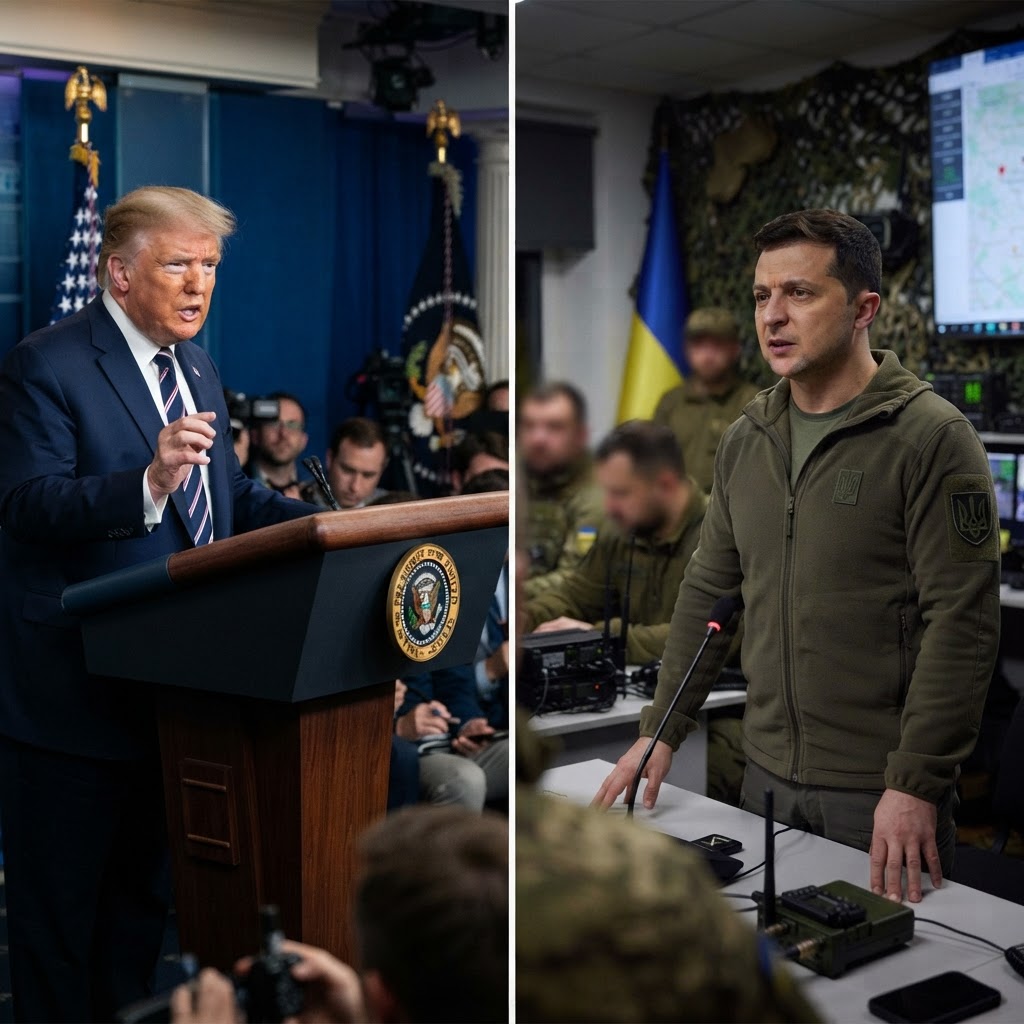
The diplomatic partnership between President Donald Trump and Ukrainian President Volodymyr Zelensky has reached a critical nadir, characterized by public hostility and a fundamental disagreement over wartime tactics. Tensions, which have been simmering since a contentious Oval Office meeting in early 2025, have recently intensified as the Trump administration openly questions Zelensky’s leadership. President Trump has publicly suggested that it is time for Ukraine to elect a new leader, arguing that the current administration has repeatedly bypassed opportunities to negotiate an end to the conflict with Russia.
A primary driver of this friction is the ongoing Ukrainian military campaign targeting Russian energy infrastructure. President Trump has issued stern warnings to Kyiv, demanding an immediate halt to drone strikes on Russian oil refineries. The White House contends that these attacks disrupt global fuel supplies and negatively impact energy prices, a concern that has become increasingly prominent as the U.S. approaches midterm elections. In response, the administration has reportedly threatened to withhold critical intelligence and military support if these operations continue.
President Zelensky has pushed back against these demands, characterizing the pressure as a result of Russian disinformation. He maintains that Russian refineries are legitimate military targets, especially as Ukraine continues to face its own energy infrastructure challenges. The Ukrainian leader has expressed skepticism regarding Trump’s claims of brokered deals, noting that such announcements often occur without prior coordination or confirmation from Kyiv.
Meanwhile, the broader geopolitical landscape remains volatile. While managing the fallout with Ukraine, President Trump has simultaneously announced a new 20-point peace plan for Gaza. This proposal centers on the complete disarmament of Hamas in structured phases, which the administration views as a necessary precursor to a new Palestinian governing body. Under this framework, the U.S. envisions a gradual withdrawal of Israeli forces from conflict zones, replaced by an international stabilization force working alongside local police to maintain order.
As the administration navigates these dual crises, the future of U.S.-Ukraine relations remains uncertain. Analysts suggest that the public rift threatens to undermine the established system of Western support for Kyiv, potentially leaving European allies in a difficult position as they attempt to maintain a unified front. With both leaders entrenched in their respective positions, the prospect of a diplomatic reconciliation appears increasingly remote.
RELATED DISPATCHES



Discussion (0)
No comments yet. Be the first to join the discussion.