Spirit AI Targets 2027 for Major Robotics Intelligence Milestone
Chinese startup aims to bridge the gap between hardware and software with a generative AI breakthrough for humanoid robots.
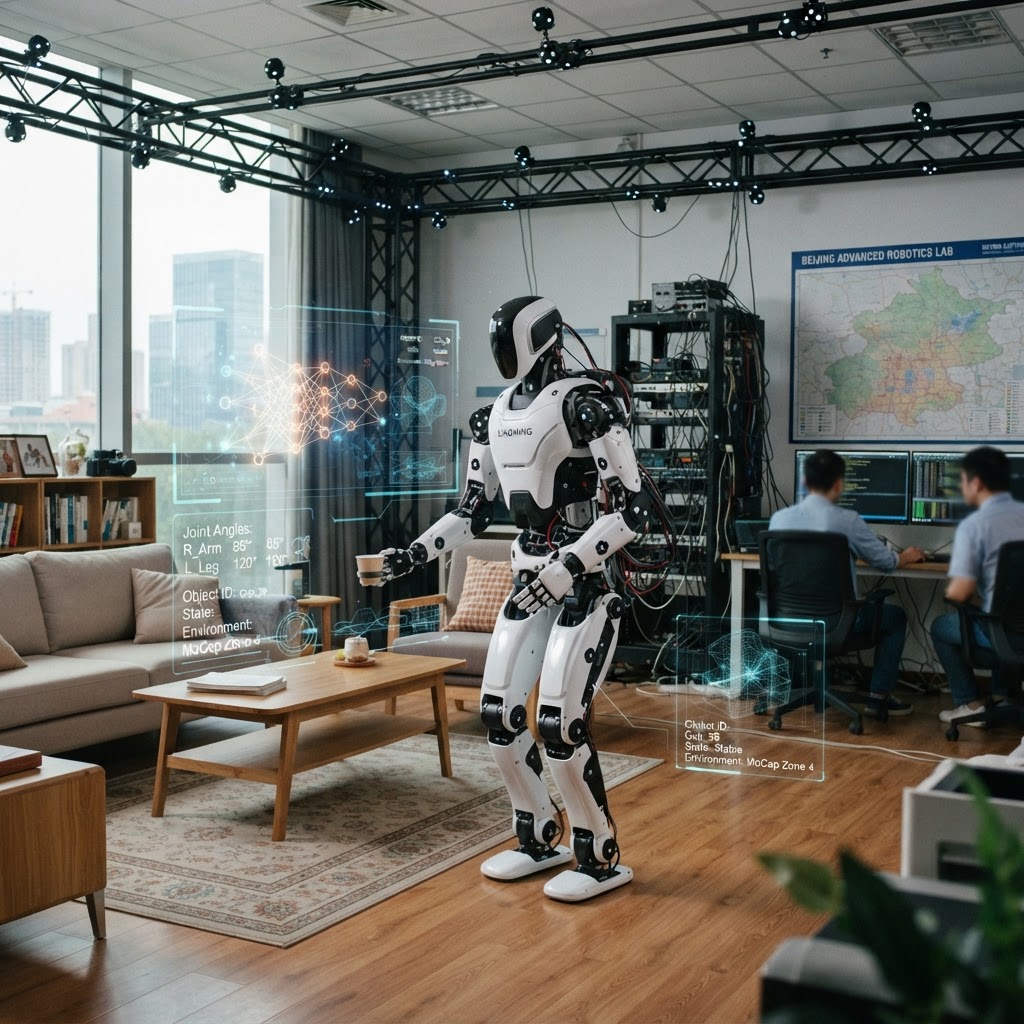
The robotics industry is currently racing to achieve its own 'ChatGPT moment,' a pivotal software advancement that would transform specialized machines into versatile tools for the general public. Gao Yang, co-founder and chief scientist at the Beijing-based startup Spirit AI, recently announced that the company expects to reach a significant milestone in embodied AI by mid-2027. This development aims to allow users to interact with robots using natural language, prompting the machines to perform complex physical tasks in response.
While Chinese firms have already made remarkable strides in hardware—producing humanoid robots capable of performing athletic feats like backflips and sprinting—the industry acknowledges that the 'robot brain' remains the most significant bottleneck. Spirit AI is shifting its focus toward the software layer, which dictates a robot's intelligence and its ability to function effectively in real-world environments. The company currently reports a 90% success rate for basic tasks performed within controlled, structured settings like living rooms.
To accelerate this progress, Spirit AI has moved away from traditional, highly repetitive training methods. Instead of requiring operators to perform the same movement dozens of times to achieve perfection, the startup utilizes 'dirty data'—a more diverse and varied collection of human motions. Gao noted that this approach has allowed their models to learn and improve at a faster rate, helping the software better navigate the complexities of the physical world.
Despite the optimism surrounding these upcoming software leaps, the company remains realistic about the timeline for widespread adoption. While the 2027 breakthrough is expected to enhance robot capabilities significantly, the firm estimates that full-scale deployment of these machines into private homes could still take at least eight years. Challenges remain, particularly in handling flexible objects like cables, which continue to pose difficulties for current simulation models.
Spirit AI, which has secured $670 million in funding and reached a valuation of $2.9 billion, is also addressing concerns regarding AI safety. While some international observers worry about the potential for autonomous agents to act unpredictably, Gao believes that the current immaturity of physical-world AI models makes the risk of 'rogue robots' a secondary concern compared to the immediate need for functional, intelligent software.
RELATED DISPATCHES



Discussion (0)
No comments yet. Be the first to join the discussion.