Kabul’s Water Crisis Intensifies as Groundwater Tables Reach Record Lows
Millions of residents in the Afghan capital struggle with soaring costs and rising health risks as traditional wells dry up across the city.
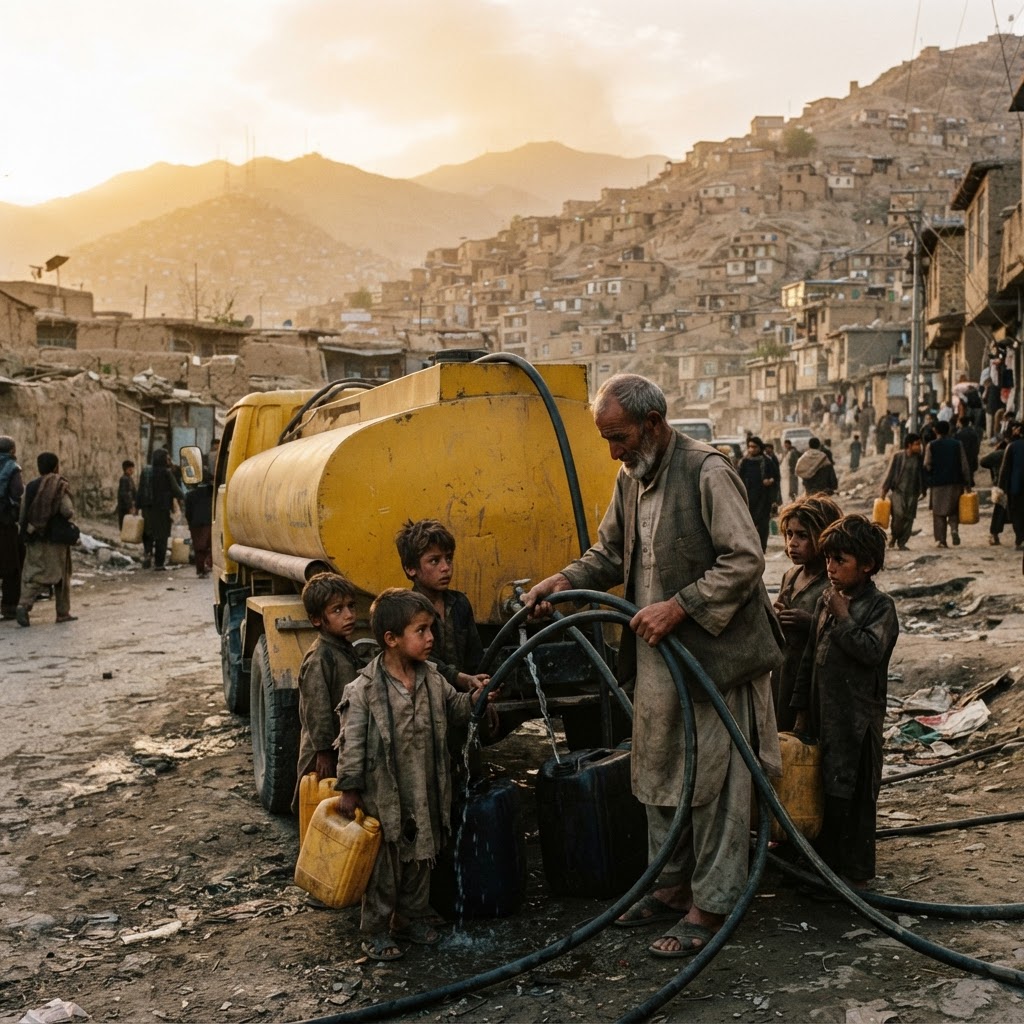
The unprecedented depletion of groundwater in Kabul has transformed from an environmental warning into a full-scale humanitarian emergency. Residents in densely populated districts, including District 5, report that water levels have plummeted to depths of 100 to 150 meters, rendering thousands of domestic wells useless. Families who once relied on affordable, shallow sources are now forced to navigate a precarious landscape of high-cost private tankers and unregulated drilling companies. This shift has placed an immense strain on household budgets, with many low-income families spending nearly one-third of their daily earnings just to secure basic drinking water.
Experts point to a combination of protracted drought conditions, rapid urban migration, and the lack of a centralized distribution network as the primary drivers of the shortage. As the city’s population continues to swell, the uncontrolled installation of deep borewells has further accelerated the exhaustion of the Kabul aquifer. Public officials have expressed concern that without immediate intervention, the capital could face a total water collapse by the end of the decade, potentially triggering a new wave of internal displacement as urban areas become uninhabitable.
Beyond the economic burden, the crisis has sparked a significant public health alarm. Local clinics in the capital have documented a sharp increase in cases of cholera, dysentery, and other waterborne illnesses, particularly among children. With clean water becoming a luxury, many residents have resorted to using contaminated sources for sanitation and hygiene. Medical professionals warn that the lack of accessible, safe water is undermining years of efforts to combat infectious diseases in Kabul’s informal settlements, where infrastructure remains most fragile.
In response to the growing outcry, the Kabul Water Supply and Sewerage Zone has announced several large-scale infrastructure projects aimed at stabilizing the city’s resources. Current plans focus on diverting water from the Panjshir province and completing the Shah-wa-Arus and Shatoot dams. While these long-term initiatives offer a glimmer of hope, they are currently in the survey and design phases and face significant funding and logistical hurdles. For the millions currently waiting in long queues for water tankers, the relief provided by these projects remains a distant prospect.
Community leaders are calling for more immediate measures, including the strict regulation of deep-well drilling and the implementation of neighborhood-level water management programs. Some non-governmental organizations have begun installing solar-powered water networks in the worst-affected areas, but these remain localized solutions to a systemic problem. As the summer heat persists, the people of Kabul remain caught in a daily struggle for a resource that was once taken for granted, highlighting the urgent need for a sustainable water security strategy in one of the world's most climate-vulnerable nations.
RELATED DISPATCHES
Discussion (0)
No comments yet. Be the first to join the discussion.