Kabul Expands Air Cargo Network to Mitigate Land Trade Blockades
Afghanistan aims to increase aerial freight capacity as terrestrial border disputes and regional tensions disrupt traditional supply chains.
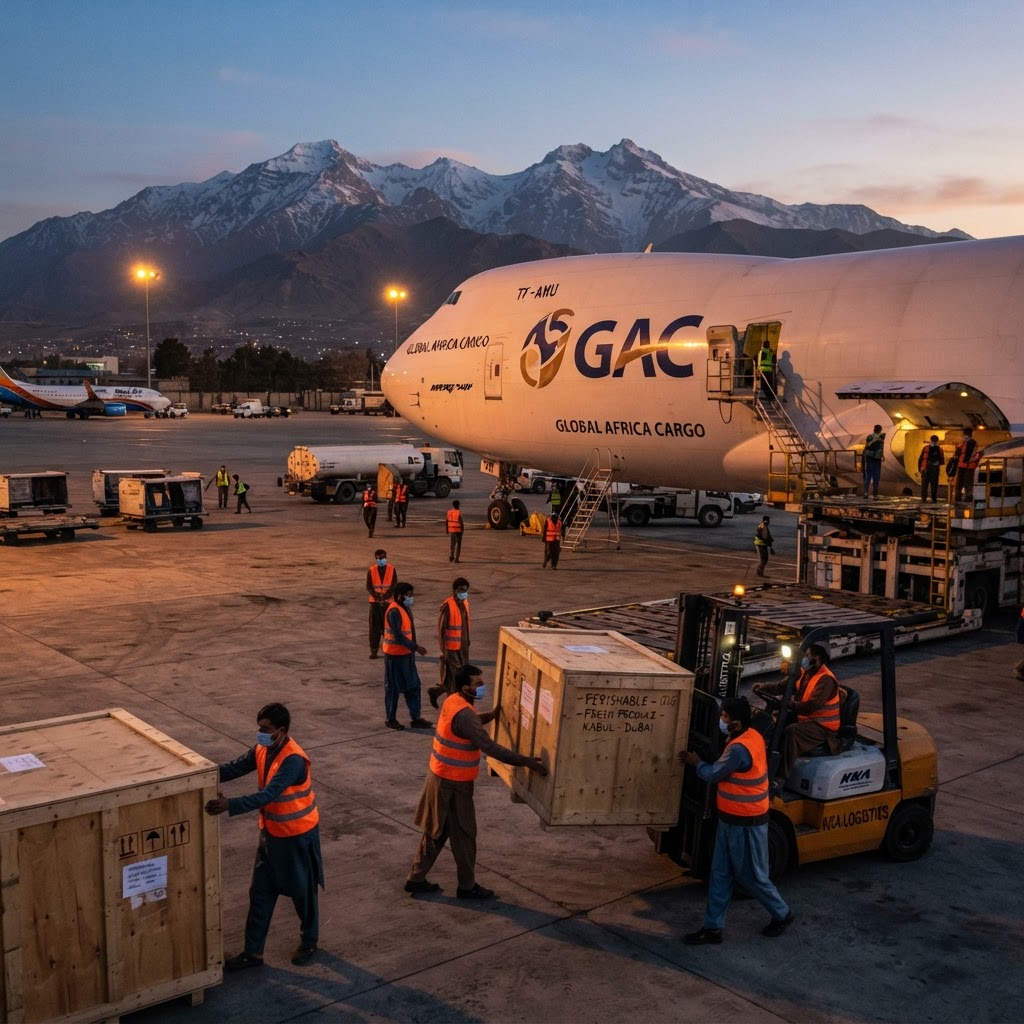
Afghanistan's Ministry of Transport and Civil Aviation has signaled a major push to expand air cargo corridors to bypass increasingly volatile land-based trade routes. The initiative comes in response to frequent shutdowns at major border crossings, particularly along the frontier with Pakistan, which have left thousands of shipping containers stranded and caused significant losses for domestic exporters.
According to ministry spokesperson Hekmatullah Asifi, the country currently maintains active aerial trade links with the United Arab Emirates, China, and India. However, officials are now in talks to establish new routes and increase the frequency of cargo flights to other regional partners to ensure a more resilient supply chain for critical goods.
The shift toward air freight is seen as a vital survival strategy for the Afghan economy, which has struggled with regional transit disruptions at both the Torkham and Spin Boldak crossings. While land transport remains more cost-effective for bulk items, the speed and reliability of air corridors are essential for the export of high-value and perishable commodities such as fresh fruits, medicinal herbs, and hand-woven carpets.
Analysts from the Afghanistan Chamber of Commerce and Investment (ACCI) have highlighted that hundreds of millions of dollars in trade were conducted via air corridors over the past year. Despite the higher operational costs compared to trucking, the private sector is being encouraged to invest in aerial logistics to avoid the unpredictable political and technical bottlenecks that frequently paralyze terrestrial ports.
Beyond immediate neighbors, the expansion plan aims to better utilize Afghanistan's international airports in Kabul, Kandahar, and Herat. By securing more favorable agreements with international airlines and improving ground-handling facilities, the government hopes to lower the financial burden on traders who are currently paying premium rates to move goods through alternative land routes.
As regional tensions continue to impact traditional commerce through third-party ports, the development of a robust aerial trade bridge is being treated as a national priority. The ministry remains committed to facilitating smoother customs procedures and providing modern storage solutions to support the growing volume of Afghan products reaching global markets.
RELATED DISPATCHES

Discussion (0)
No comments yet. Be the first to join the discussion.