Justice Sotomayor Signals Openness to Supreme Court Term Limits
The senior liberal justice suggests that rotating judicial service could help insulate the high court from political influence.
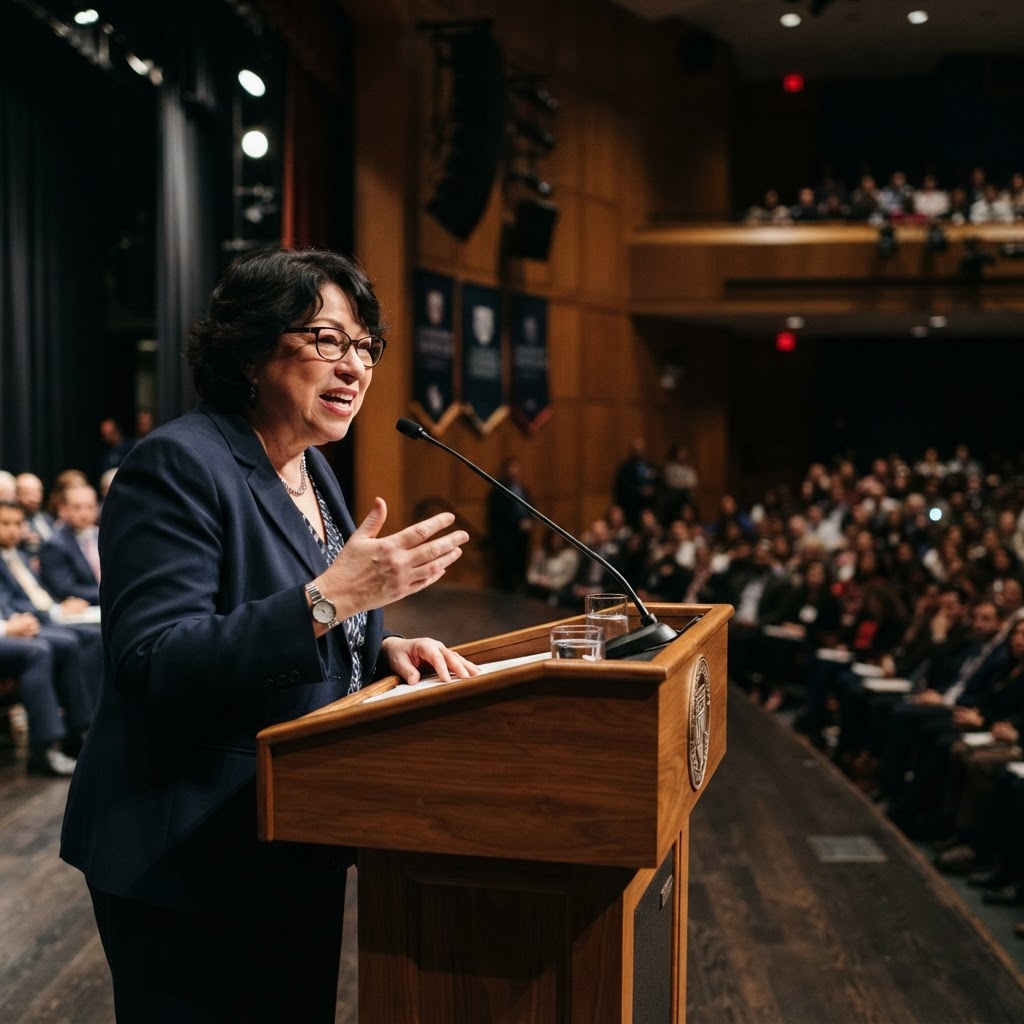
During a recent appearance in Philadelphia, Supreme Court Justice Sonia Sotomayor indicated a potential willingness to support the implementation of term limits for the nation's highest court. While the justice initially noted she would not offer a formal opinion on the matter, her subsequent remarks suggested that she is open to the concept, particularly as a means to maintain judicial independence and reduce the influence of politics on the bench. Sotomayor observed that many other democratic nations successfully manage their judiciaries without relying on lifetime appointments.
This development arrives as the debate over Supreme Court reform gains renewed momentum. Legislative efforts, such as the Supreme Court Biennial Appointments and Term Limits Act, have been reintroduced by lawmakers seeking to address declining public trust in the institution. These proposals generally advocate for 18-year terms, after which justices would transition to a senior status rather than retiring entirely. This structure aims to create a more predictable appointment cycle, ensuring that a new justice is nominated every two years.
Proponents of these reforms argue that such changes would enhance democratic accountability and prevent justices from becoming overly entrenched in their roles. By shifting the duties of long-serving members, supporters believe the Court could better reflect the evolving values of the electorate. Furthermore, a system of senior justices could provide a practical solution to institutional challenges, such as when multiple recusals leave the Court without a quorum to hear specific cases.
However, the path to such reform remains legally complex. Critics and some constitutional scholars have raised significant questions regarding whether Congress possesses the authority to impose these limits via statute, or if a constitutional amendment would be required to alter the lifetime tenure guaranteed under Article III. Despite these hurdles, the conversation continues to resonate with the public, as bipartisan majorities have expressed support for modernizing the Court's structure to ensure its long-term legitimacy.
RELATED DISPATCHES



Discussion (0)
No comments yet. Be the first to join the discussion.