Israel Faces Political Deadlock Following Election
Neither Benjamin Netanyahu nor Gadi Eisenkot secures a clear parliamentary majority as vote counting continues.
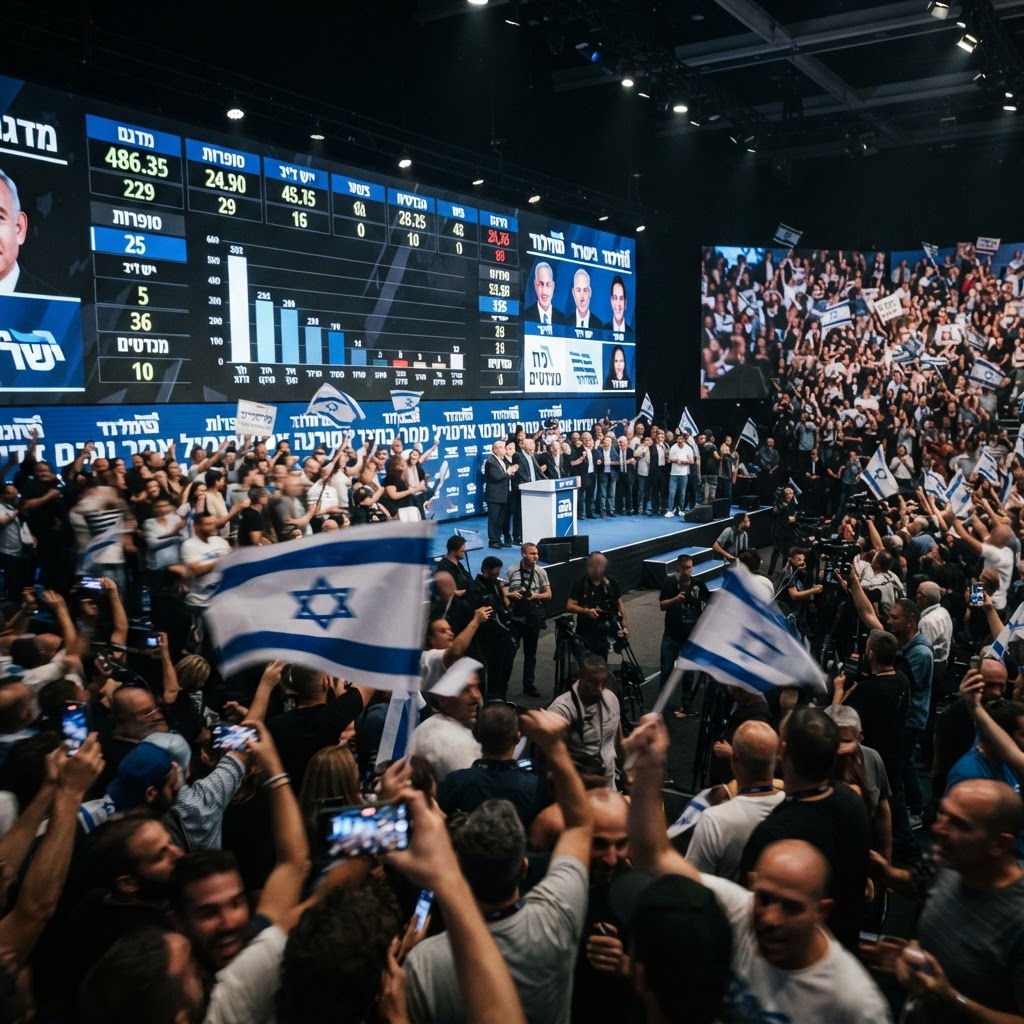
Israel’s latest general election has concluded without a definitive victor, leaving the nation’s political future in a state of uncertainty. Preliminary exit polls broadcast by major television networks indicate that neither the coalition led by Prime Minister Benjamin Netanyahu nor the opposition bloc headed by Gadi Eisenkot has managed to capture the 61 seats required to form a governing majority in the 120-member Knesset.
The electoral landscape appears deeply fractured, with both primary camps struggling to bridge the gap toward a stable government. While early projections suggest a competitive race, the final outcome remains subject to the official verification of ballots. Election authorities have emphasized that exit polls are subject to potential error, and the definitive seat distribution will only be confirmed once the full count is completed and audited.
A notable feature of this election cycle was the record-high voter turnout, particularly within Arab communities. This surge in participation has introduced a complex variable into the coalition-building process, as these parties may now hold the balance of power. Analysts suggest that these smaller factions could act as potential kingmakers, forcing the major political leaders into difficult negotiations to secure the necessary support for a mandate.
As the country awaits the final tally, the political atmosphere remains tense. Opposition figures have already signaled their intent to challenge the current administration's legitimacy, while Netanyahu’s allies continue to monitor the results closely. In the coming days, President Isaac Herzog is expected to initiate the formal process of consulting with party leaders before tasking a member of the Knesset with the challenging responsibility of assembling a new government.
This deadlock underscores the deep ideological divisions currently shaping Israeli society. With neither side able to claim a decisive mandate, the prospect of prolonged coalition talks or even further political instability looms large. The nation now turns its attention to the Central Elections Committee, which continues the meticulous work of processing the remaining ballots to determine the final composition of the next parliament.
RELATED DISPATCHES

Multi-State Manhunt Intensifies After Escaped Inmate's Vehicle Found in Illinois
1 hour 31 minutes ago
Talarico Maintains Slim Advantage Over Paxton in Texas Senate Contest
1 hour 31 minutes ago
Justice Department to Deploy 1,000 Monitors Nationwide for Midterms
1 hour 32 minutes agoDiscussion (0)
No comments yet. Be the first to join the discussion.