IEA Leader Declares Moral Enforcement the Primary Fruit of Twenty-Year Struggle
Supreme Leader Hibatullah Akhundzada characterizes the implementation of Sharia-based virtue laws as a central goal of the movement’s long-standing jihad.
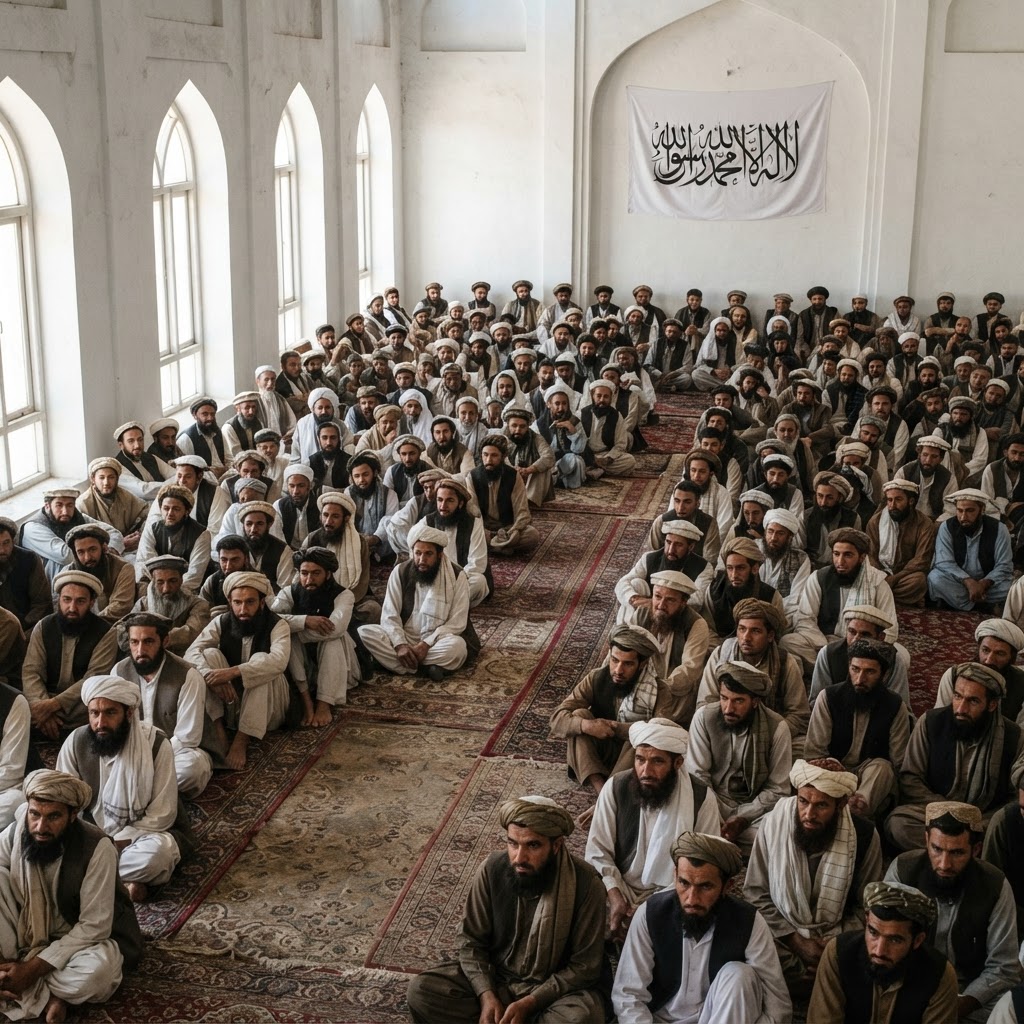
The leader of the Islamic Emirate, Hibatullah Akhundzada, has reaffirmed that the strict enforcement of religious virtue and the prevention of vice were fundamental objectives of the group's two-decade military campaign. Addressing a gathering of officials, religious scholars, and tribal elders in Kandahar, the leader emphasized that the conflict was never merely a pursuit of political power or territorial control. Instead, he framed the struggle as a spiritual mission designed to establish a governance system rooted in their specific interpretation of Sharia law.\n\nDuring the meeting, which included representatives from five southern provinces, the leader stated that the Law on the Promotion of Virtue and the Prevention of Vice is currently the government's highest priority. This legal framework, formally ratified in August 2024, codifies a series of behavioral and social regulations that have become central to the administration’s domestic policy. The leader’s remarks suggest that the current phase of governance is viewed as the fulfillment of the original goals set forth during the insurgency against foreign forces and the previous administration.\n\nThe enacted morality law contains 35 articles that regulate various aspects of public life, including dress codes for men and women, the requirement for men to grow beards, and restrictions on the use of music and images of living beings. The Ministry of Vice and Virtue has been granted broad authority to monitor these standards, with the power to detain individuals and issue punishments. Akhundzada urged all government bodies to support these inspectors, asserting that the moral purification of society is essential for the stability and success of the Islamic Emirate.\n\nInternational observers and human rights organizations have frequently expressed concern over the impact of these regulations on personal freedoms and the rights of Afghan women. Many critics argue that the focus on moral policing exacerbates the country’s existing humanitarian and economic challenges. However, the leadership’s recent rhetoric highlights a firm commitment to ideological priorities, often downplaying economic concerns in favor of establishing what they describe as a pure Islamic society.\n\nIn his address, the leader also called upon the nation’s scholars and elders to take an active role in the reformation of society. He argued that the preservation of the values won through the jihad requires continuous vigilance and the active promotion of religious principles. By framing the enforcement of these laws as the ultimate victory of the conflict, the leader is reinforcing the ideological identity of the state during a period of ongoing international isolation and domestic change.\n\nThis latest declaration serves as a clear indication that the Islamic Emirate intends to continue its course of centralized moral governance. As the ministry expands its reach across the provinces, the emphasis on these regulations remains the defining feature of Hibatullah Akhundzada’s leadership and his vision for the future of Afghanistan.
RELATED DISPATCHES
Discussion (0)
No comments yet. Be the first to join the discussion.