Global Chip Rout Triggers Shift Toward Government Bonds
Investors pivot to fixed-income assets as skepticism grows regarding the long-term profitability of artificial intelligence infrastructure.
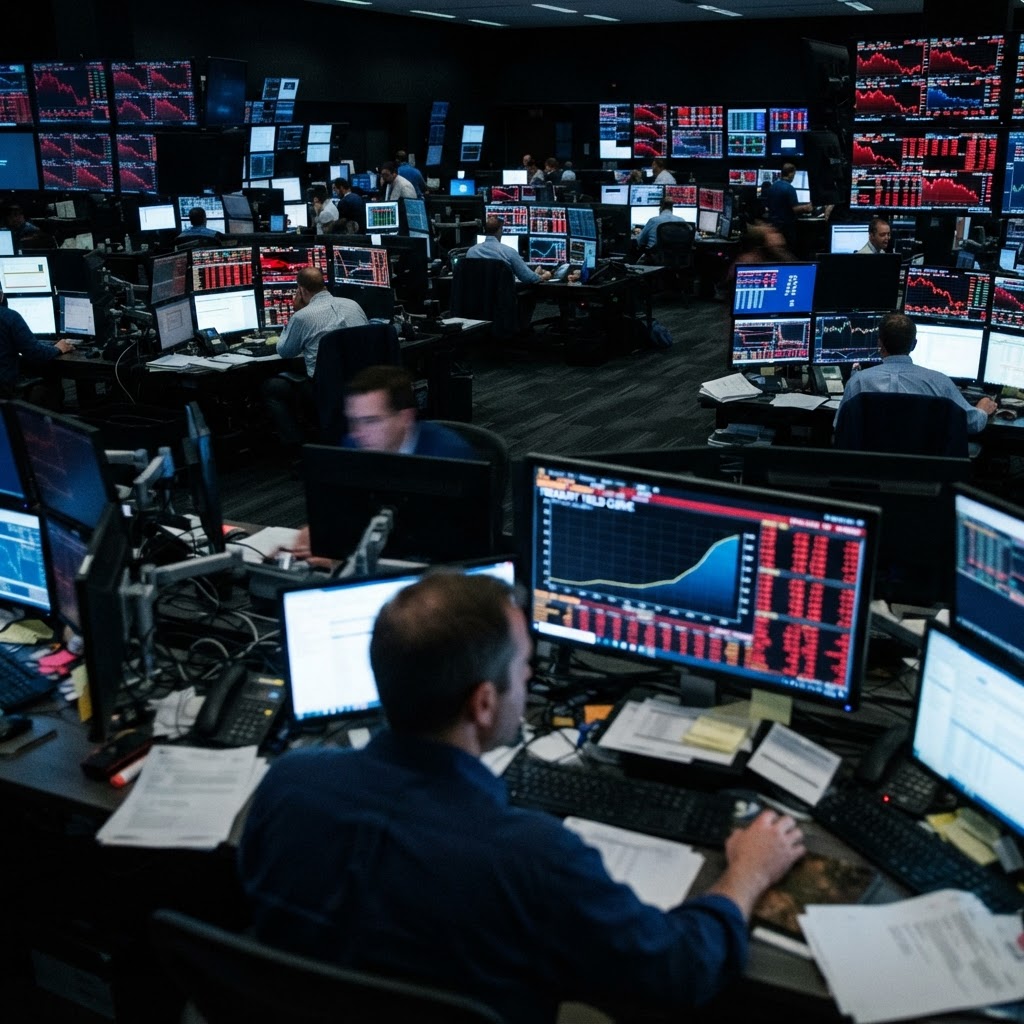
A significant global selloff in semiconductor stocks has intensified, erasing approximately $1 trillion in market value as investors grow increasingly wary of the artificial intelligence sector. The downturn, which has impacted major players across the United States, Europe, and Asia, reflects a broader reassessment of the AI investment boom. Market participants are now questioning the sustainability of massive capital expenditures in AI infrastructure, particularly as the sector faces mounting pressure from rising borrowing costs and heightened competition.
Recent market data indicates that the Philadelphia Semiconductor Index has suffered a sharp decline, dropping nearly 10% over a six-session period. Prominent technology firms, including Arm, Applied Materials, and Intel, have seen their valuations retreat as sentiment shifts. The trend is not limited to the U.S.; Asian markets have also experienced significant volatility, with companies like SK Hynix and Samsung Electronics recording substantial losses as the negative momentum ripples through global supply chains.
At the heart of this market correction is a growing concern over Federal Reserve interest rate policies and the impact of inflation on corporate debt. As borrowing costs remain elevated, the financial viability of AI-related projects is being scrutinized more closely. Investors are increasingly sensitive to signs of slowing growth within leading AI labs, leading to a rapid rotation out of high-growth tech equities and into more stable assets.
In response to the heightened uncertainty, many traders are seeking refuge in government bonds. This flight to safety has been particularly evident in international markets, where yields on sovereign debt have fluctuated as capital moves away from speculative tech holdings. By prioritizing fixed-income products, investors are attempting to mitigate the risks associated with potential market corrections and the cooling of the AI-driven rally.
While analysts remain divided on whether this represents a temporary pullback or the beginning of a more prolonged correction, the current environment marks a clear departure from the optimism that defined the sector earlier this year. As the market digests new economic data and evaluates the long-term profitability of AI, the focus has shifted from aggressive growth to capital preservation and risk management.
RELATED DISPATCHES



Discussion (0)
No comments yet. Be the first to join the discussion.