Far-Right Movements Leverage Ceuta Border Crisis to Reshape European Policy
The recent surge of migrants into the Spanish enclave has empowered hard-line political factions to dictate the continent's immigration narrative.
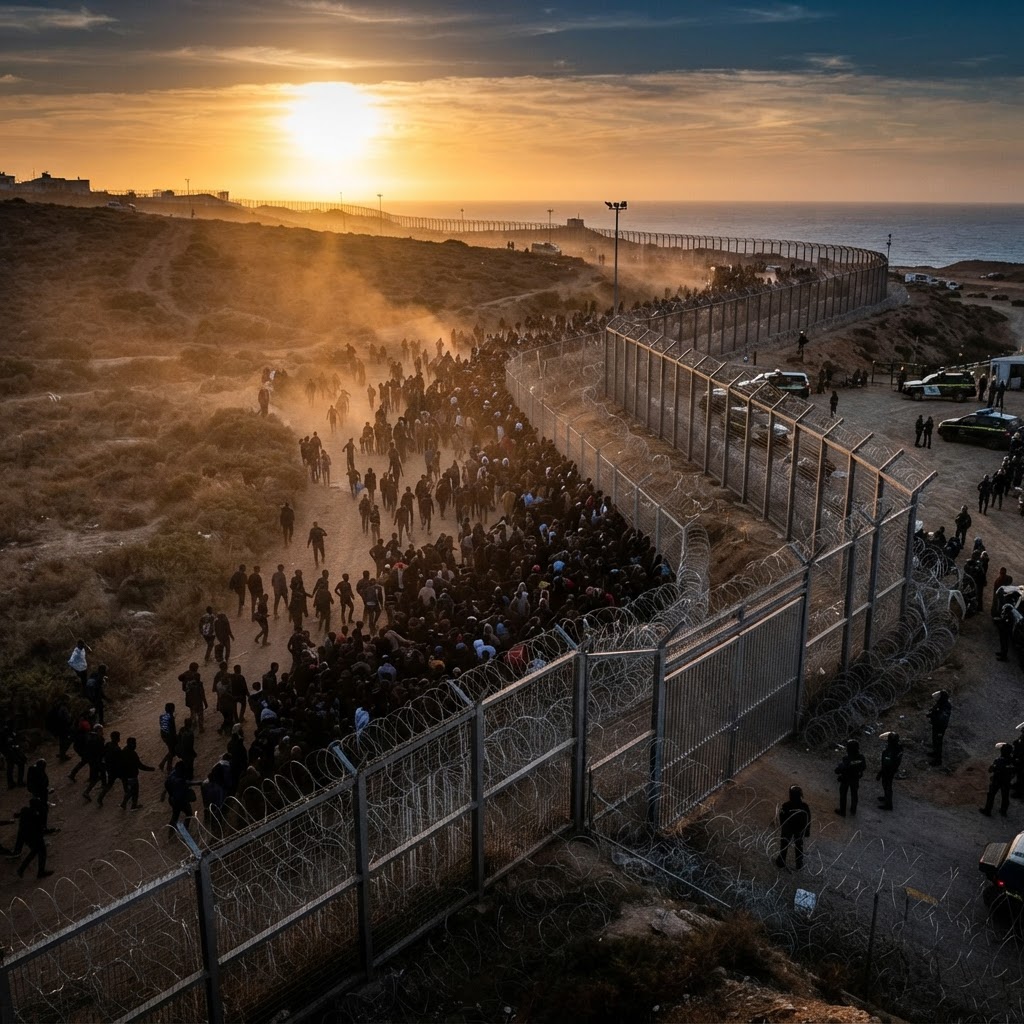
The recent mass influx of migrants into the Spanish enclave of Ceuta has served as a powerful catalyst for far-right political groups across Europe. Following a chaotic breach of the border that saw tens of thousands of individuals enter the territory, anti-immigrant factions have successfully utilized the imagery of the crisis to argue that European borders are fundamentally compromised. This development marks a significant shift from the political climate of 2015, as these movements have transitioned from the fringes of power to influential positions within national governments.
Critics and analysts observe that the weaponization of visual media from the border has allowed far-right leaders to dominate the public discourse. By framing the event as an "invasion," these politicians have pressured centrist leaders to adopt more restrictive stances. Even as official statistics indicate a broader decline in irregular migration across the continent, the visceral impact of the Ceuta footage has overshadowed these figures, creating a perception of systemic failure that hard-line parties are eager to exploit.
In response to the pressure, several European leaders have moved to distance themselves from more liberal immigration policies. High-profile figures, including Italian Prime Minister Giorgia Meloni, have taken performative steps to signal border security, such as proposing the suspension of Schengen travel rights with Spain. This shift reflects a broader trend where mainstream parties, fearing a political backlash, have begun to mirror the rhetoric and policy proposals previously reserved for the far right.
Experts suggest that this trend is deeply rooted in a decade of shifting political priorities. The erosion of social welfare programs has fostered an environment of perceived scarcity, which has proven to be fertile ground for anti-migrant sentiment. As the narrative continues to be driven by these hard-line perspectives, the European Union faces an internal struggle to balance humanitarian obligations with the growing political demand for aggressive border enforcement and rapid repatriation efforts.
RELATED DISPATCHES



Discussion (0)
No comments yet. Be the first to join the discussion.