Bank of Korea Lifts Base Rate to 3.25% Amid Robust Growth and Sticky Inflation
The central bank resumes monetary tightening as a semiconductor-led export boom fuels economic expansion and persistent price pressures.
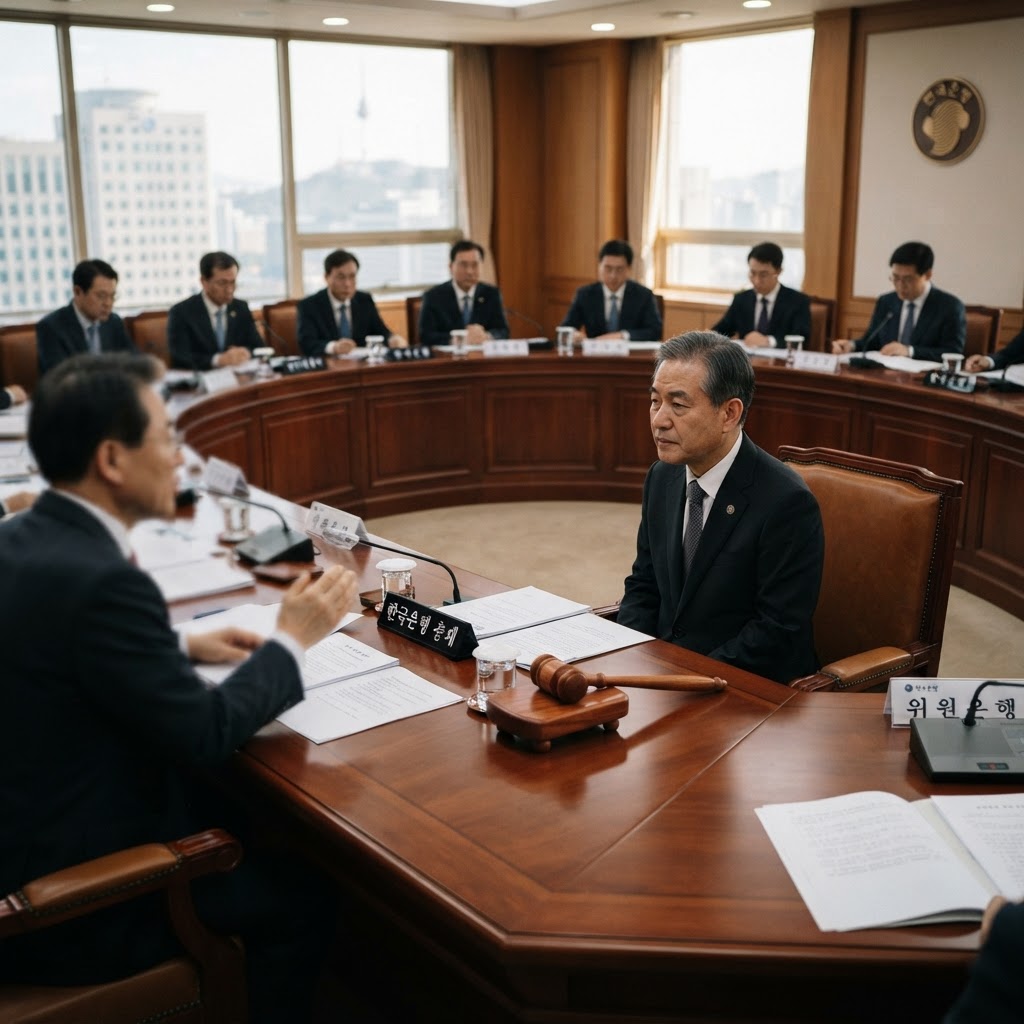
The Bank of Korea (BOK) has officially increased its benchmark seven-day repurchase rate by 25 basis points, bringing the base rate to 3.25%. This decision, finalized during the Monetary Policy Board's concluding meeting of 2026, marks the highest interest rate level in two years. The move follows a brief pause in October and underscores the central bank's commitment to curbing inflation that continues to hover well above its 2% target.
Governor Shin Hyun-song highlighted that the decision was driven by a combination of strengthened economic momentum and the need to address long-term inflationary risks. While consumer price inflation showed slight moderation in October, it remains elevated in the upper 2% range. The board expressed concern that without preemptive action, these price pressures could become deeply entrenched, particularly as demand-side factors gain strength from a rapidly expanding economy.
A primary catalyst for this tightening cycle is the unprecedented semiconductor boom, which has significantly bolstered South Korea's export performance and overall investment. Reflecting this surge, the BOK has sharply upgraded its economic growth forecasts, projecting a 3.9% expansion for this year and a robust 4.1% for 2027. This growth trajectory, while positive for the nation's trade balance, has necessitated a more restrictive monetary stance to prevent the economy from overheating.
The policy shift was not unanimous, with two of the seven board members dissenting in favor of maintaining the current 3.00% rate. Despite this split, the central bank’s forward-looking projections suggest that further tightening may remain on the table. With financial stability risks—including rising household debt and housing market volatility—still looming, the BOK has signaled that it will continue to monitor domestic and global conditions closely to ensure price stability remains the priority.
RELATED DISPATCHES



Discussion (0)
No comments yet. Be the first to join the discussion.