Bahrain Intercepts Iranian Drone Strikes for Second Time in Three Days
Tehran claims to have targeted a U.S. radar facility as regional tensions flare amid stalled peace negotiations.

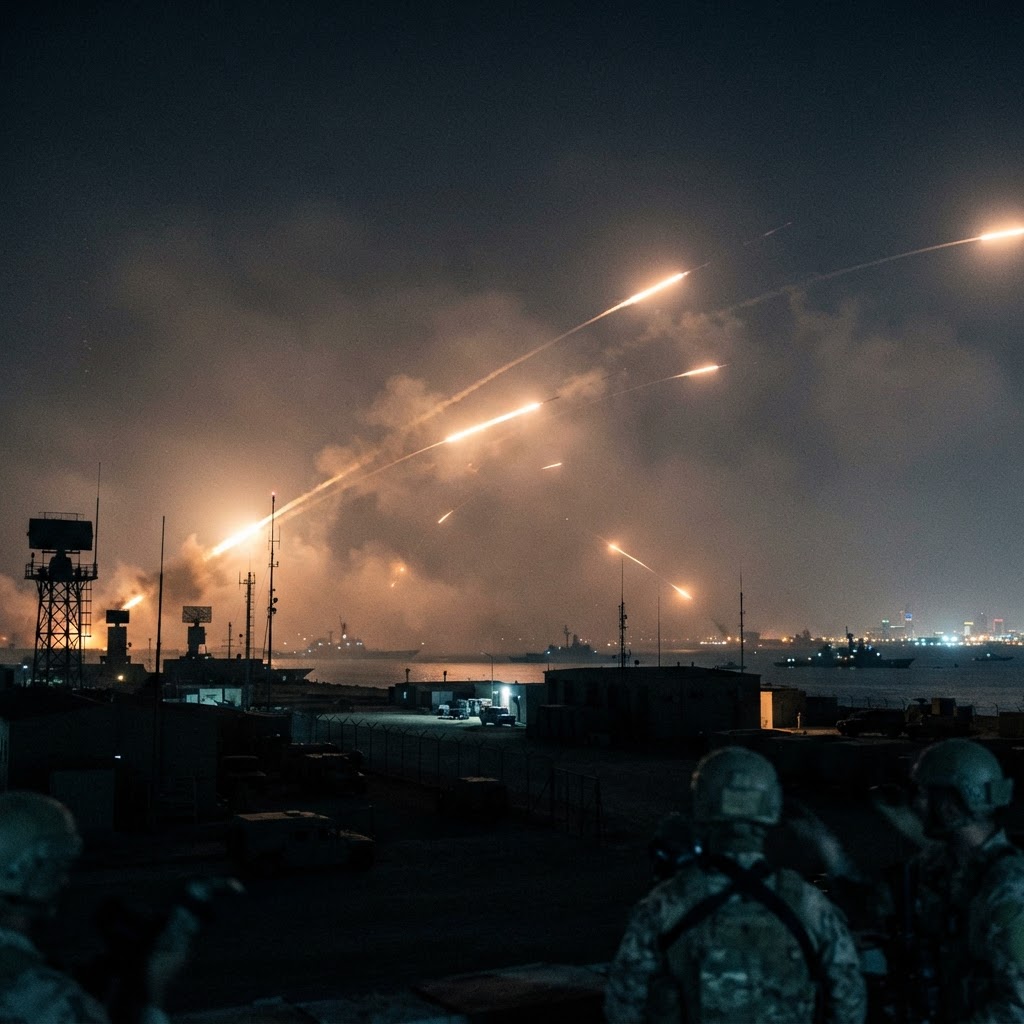
Bahraini air defense systems successfully neutralized multiple aerial threats on Sunday, marking the second instance of Iranian-led drone attacks against the Gulf nation in less than a week. The Bahrain Defence Force confirmed that its units intercepted and destroyed the incoming munitions before they could reach their intended targets, maintaining a high state of combat readiness throughout the incident. The kingdom’s Interior Ministry issued urgent safety alerts to residents, advising them to seek shelter and remain calm as explosions were reported across the region.
Iran’s Islamic Revolutionary Guard Corps (IRGC) claimed responsibility for the operation, asserting that they launched six drones specifically aimed at a U.S. air defense radar system located at the Al-Riffa helicopter base. This follows a similar incident on Friday, during which U.S. forces reported intercepting two Iranian drones headed toward the island. While Tehran has characterized these strikes as retaliation for what it describes as hostile American actions, there has been no official confirmation from U.S. or Bahraini authorities regarding any damage to military installations.
Bahrain’s Foreign Ministry issued a stern condemnation of the strikes, labeling them a flagrant violation of sovereignty and a continuation of Iran’s aggressive regional posture. Officials in Manama emphasized that the kingdom refuses to serve as a battleground for settling regional scores and declared that Tehran bears full responsibility for the consequences of these provocations. The United Arab Emirates and other regional partners have also voiced strong solidarity with Bahrain, denouncing the escalation.
These hostilities represent a notable uptick in violence following a roughly two-month period of relative calm. The renewed aggression occurs as diplomatic efforts to resolve the conflict—which began with joint U.S.-Israeli strikes on Iran in late February—remain largely deadlocked. As the situation evolves, the presence of U.S. naval assets in the region continues to be a focal point, with military officials monitoring the potential for further instability.
RELATED DISPATCHES


Discussion (0)
No comments yet. Be the first to join the discussion.