Iran Launches Drone Strikes Against Bahraini Radar Facilities
Bahraini air defenses intercept multiple Iranian drones targeting a U.S. military installation amid rising regional tensions.
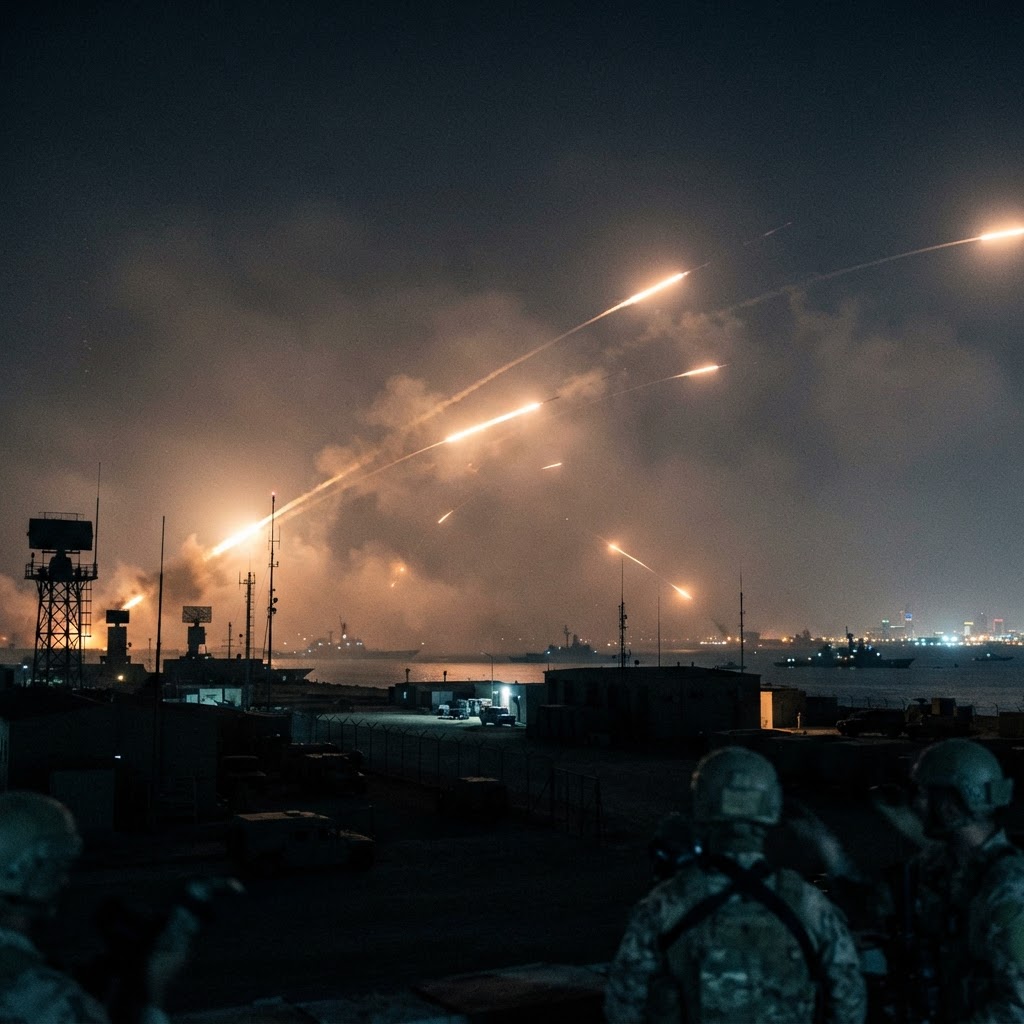
Tensions in the Persian Gulf have reached a critical point following a series of aerial assaults by Iran against the Kingdom of Bahrain. On Sunday, the Islamic Revolutionary Guard Corps (IRGC) claimed to have deployed six drones to strike a U.S. air defense radar facility located at the Al-Riffa helicopter base. This incident marks the second time in three days that Iranian forces have attempted to target American military assets within the island nation.
Bahraini authorities responded swiftly to the threat, with the military confirming that its air defense systems successfully intercepted and destroyed the incoming projectiles before they could reach their intended targets. Despite the successful defense, the situation triggered widespread alarm across the kingdom. Residents reported hearing multiple explosions throughout the early morning hours, prompting the Interior Ministry to issue urgent safety alerts and advise citizens to seek shelter.
Tehran has framed these operations as a retaliatory measure against what it describes as hostile American actions. The IRGC stated that the strikes represent a "second phase" of its response to recent U.S. military activity in the region. Furthermore, Iranian officials have issued renewed warnings regarding the Strait of Hormuz, asserting that the vital maritime corridor remains closed and threatening more severe consequences should the United States continue its current military posture.
In response to the aggression, the Bahraini Foreign Ministry issued a stern condemnation, declaring that the kingdom refuses to serve as a battleground for regional power struggles. Officials in Manama have held Iran fully accountable for the escalation and the potential consequences of these systematic attacks. While the U.S. military has previously denied claims that earlier radar strikes were successful, the frequency of these incursions has heightened concerns regarding the stability of the Gulf.
This latest flare-up occurs against a backdrop of stalled diplomatic efforts to resolve the broader conflict that has persisted since early 2026. As the U.S. Navy’s Fifth Fleet remains stationed in Bahrain, the region continues to face significant uncertainty. Both international observers and local authorities remain on high alert as the standoff between Washington and Tehran shows little sign of de-escalation.
RELATED DISPATCHES



Discussion (0)
No comments yet. Be the first to join the discussion.