US Army Successfully Neutralizes Unstable Explosives in Iowa
Military officials confirm the controlled detonation of nearly five tons of degraded lead azide at the Iowa Army Ammunition Plant.
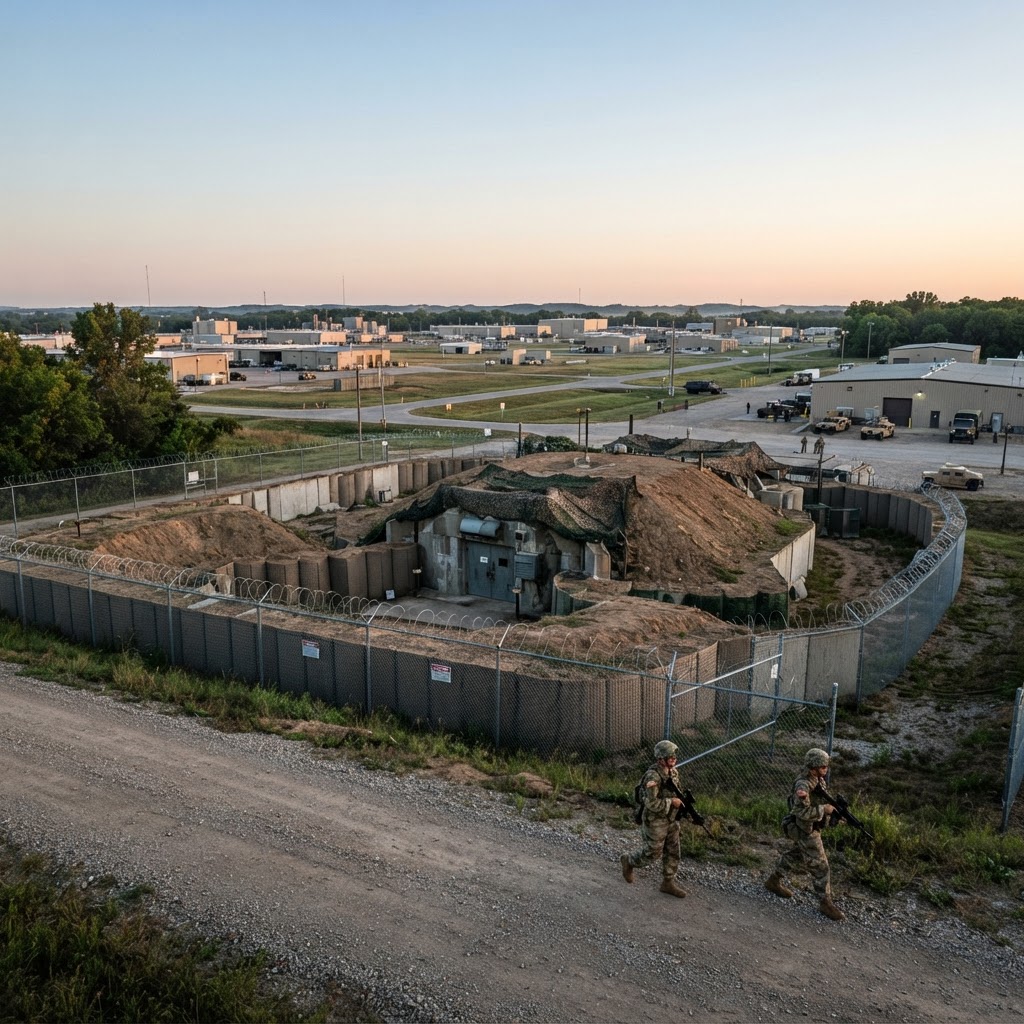
On Wednesday morning, the U.S. Army executed a controlled detonation of approximately 9,700 pounds of degraded lead azide at the Iowa Army Ammunition Plant in Middletown. The operation, which took place at 9 a.m. local time, was deemed necessary by federal authorities to eliminate a severe safety hazard posed by the aging, crystallized explosive material. Military leadership maintained that the chemicals had become so unstable that any attempt at transport or chemical neutralization presented an unacceptable risk of an accidental, uncontrolled explosion.
The decision to proceed followed an extensive multi-agency review involving the EPA, FEMA, and the ATF. Officials argued that the in-place detonation was the only viable path to mitigate the threat, as the material had become highly sensitive to heat, friction, and vibration. Despite the military's assessment, the plan faced significant pushback from local residents and environmental advocates who expressed deep concerns regarding the potential release of a toxic lead dust plume into the surrounding atmosphere.
To address these environmental fears, the Army implemented rigorous containment measures, including the use of earth, sand, and high-expansion foam to suppress debris and limit the dispersion of hazardous particles. Following the blast, federal agencies reported that real-time air monitoring sensors detected zero levels of airborne lead in the vicinity of the plant. NASA aircraft also conducted aerial monitoring to ensure the safety of the surrounding region.
While the operation was labeled a success by military and state officials, the lead-up to the event was marked by intense legal and political debate. An emergency appeal to halt the detonation was denied by a federal court, which concluded that the risks associated with delaying the disposal outweighed the potential impacts of the controlled blast. With the stockpile now destroyed, authorities are continuing to monitor the area to ensure no long-term environmental consequences remain for the local community.
RELATED DISPATCHES



Discussion (0)
No comments yet. Be the first to join the discussion.