US Army Completes Controlled Detonation of Unstable Explosives in Iowa
Military officials report successful destruction of nearly five tons of degraded lead azide following legal and environmental scrutiny.
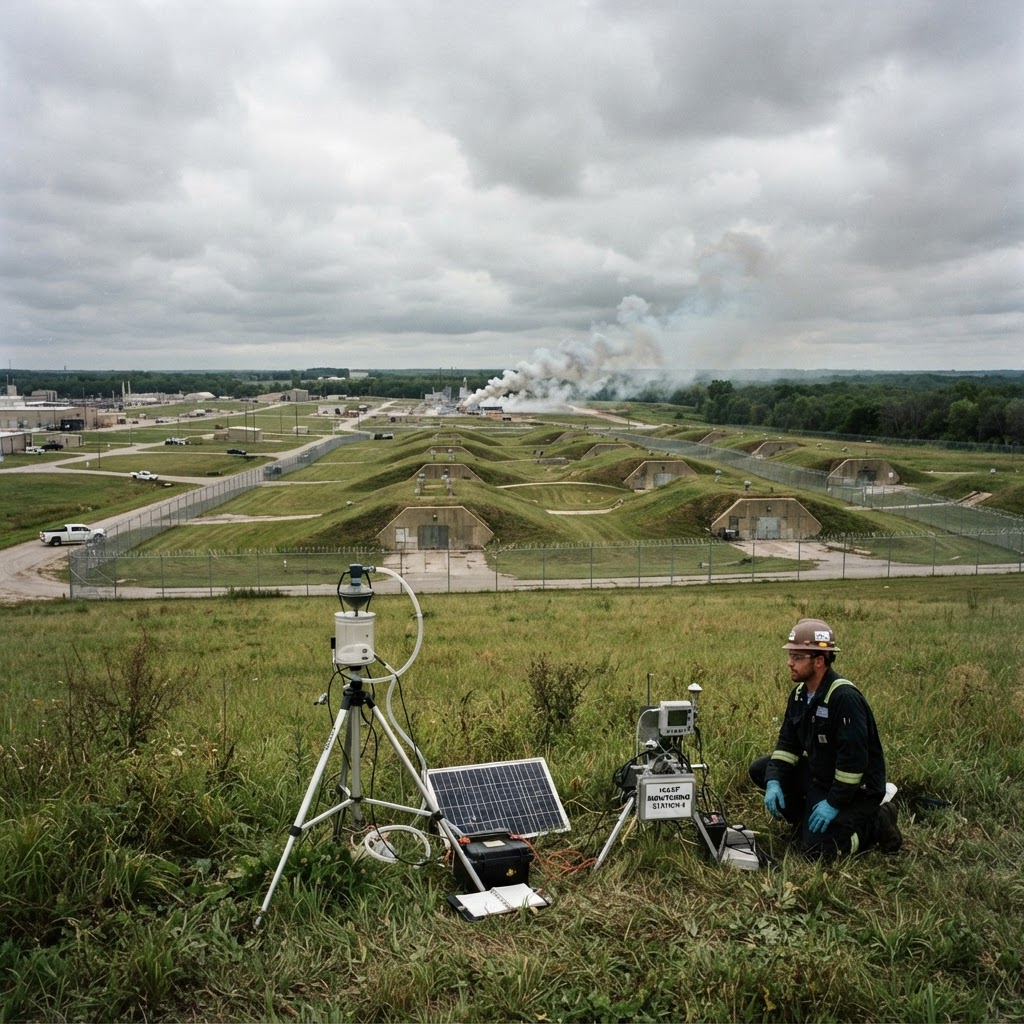
The U.S. Army successfully executed a controlled detonation of approximately 9,700 pounds of degraded lead azide at the Iowa Army Ammunition Plant in Middletown on Wednesday morning. The operation, which involved 68 drums of highly sensitive explosive material, was deemed necessary by military leadership after routine inspections revealed the chemicals had crystallized, making them dangerously volatile and susceptible to accidental ignition from minor vibrations or heat.
Prior to the blast, the project faced significant legal and public opposition. Environmental groups, including the Iowa Environmental Council and the Sierra Club, had sought to halt the operation, citing concerns over the potential dispersal of toxic lead dust into the surrounding environment. However, the Eighth Circuit Court of Appeals ultimately cleared the way for the detonation, noting that the risks of an unplanned, uncontrolled explosion outweighed the potential impacts of a managed event.
To mitigate environmental and safety risks, the Army employed extensive containment measures, including the use of earth, sand, water, and high-expansion foam barriers. Acting Army Secretary Adam Telle emphasized that the decision was reached through a consensus-based approach involving multiple federal agencies, including the EPA and FEMA, to ensure the highest level of public safety during the disposal process.
Following the event, officials reported that the operation was tremendously successful. Preliminary data from the Environmental Protection Agency indicated zero detectable levels of airborne lead in the immediate aftermath of the blast. While residents in the vicinity were advised to evacuate or remain indoors as a precaution, authorities continue to conduct intensive air, water, and soil sampling to monitor for any long-term environmental impact.
Major General Eric Shirley, who oversaw the mission, stated that the destruction of the stockpile was the only viable path to eliminate the hazard. In the wake of the incident, the Army has committed to a thorough examination of all weapon storage facilities across the country to prevent similar degradation issues from occurring in the future.
RELATED DISPATCHES



Discussion (0)
No comments yet. Be the first to join the discussion.