Trump, Xi, and Putin Conclude Historic Trilateral Summit Without Major Nuclear Breakthroughs
The three global leaders met in Shenzhen to discuss nuclear risks and international security, but the resulting declaration lacked concrete policy changes.
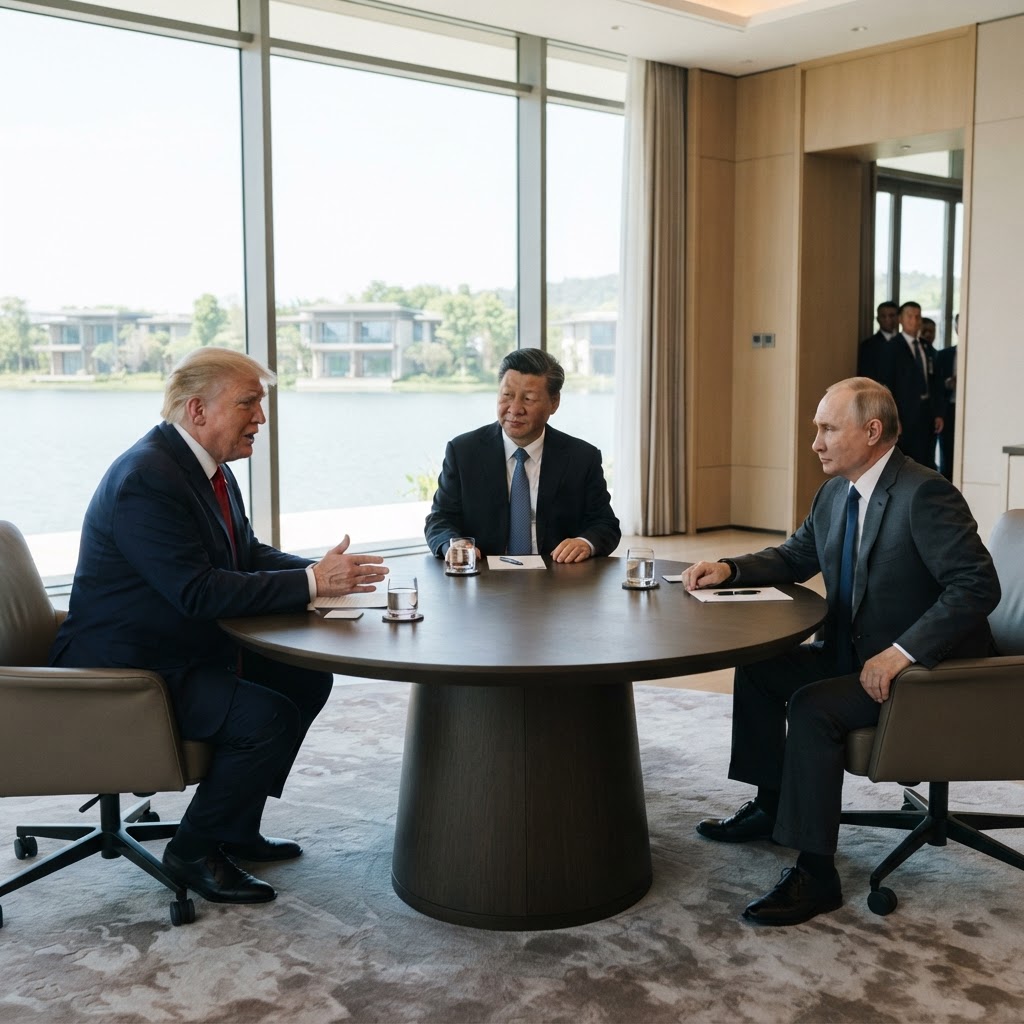
In an unprecedented diplomatic gathering, U.S. President Donald Trump, Chinese President Xi Jinping, and Russian President Vladimir Putin convened in Shenzhen, China, for their first-ever trilateral summit. The meeting, held on the sidelines of the APEC summit, brought together the leaders of the world's three largest nuclear powers to address global stability and the reduction of nuclear risks. Despite the historic nature of the encounter, the discussions concluded without any significant breakthroughs or specific arms-control agreements.
The leaders issued a four-point joint declaration that emphasized a shared commitment to international security and the necessity of preventing nuclear conflict. The statement reaffirmed the principle that a nuclear war cannot be won and must never be fought. However, the document provided no specific timelines, reduction targets, or actionable frameworks to address the growing nuclear arsenals of the three nations, leaving analysts to characterize the outcome as largely symbolic.
Beyond nuclear security, the summit touched upon broader geopolitical concerns, including the reform of the United Nations and the stability of global energy supplies. The leaders expressed a collective desire to increase the production and distribution of refined petroleum products to mitigate ongoing supply chain disruptions. Additionally, the declaration included a pointed critique of the International Criminal Court, with the three powers asserting that such institutions should not overstep their jurisdictional boundaries or infringe upon the immunity of state officials.
Notably absent from the final declaration were any references to the ongoing war in Ukraine or the situation in Iran, despite these issues being highlighted as key agenda items by President Trump prior to the talks. While the leaders engaged in dialogue regarding regional conflicts, the summit failed to produce a unified path toward peace in Eastern Europe. Russian officials later indicated that the war in Ukraine was not the central focus of the discussions, suggesting that the parties remained divided on potential compromises.
While the meeting served as a high-profile platform for the three leaders to project influence, the lack of substantive policy shifts underscored the deep-seated strategic differences between Washington, Beijing, and Moscow. The summit concluded with the leaders departing after roughly 90 minutes of talks, leaving the international community to weigh the significance of the diplomatic engagement against the absence of tangible progress on the world's most pressing security challenges.
RELATED DISPATCHES


Discussion (0)
No comments yet. Be the first to join the discussion.