Trilateral Summit in Shenzhen Sparks Global Concern Over Shifting Power Dynamics
The unprecedented meeting between Trump, Xi, and Putin fuels fears of a new world order designed to diminish American influence.
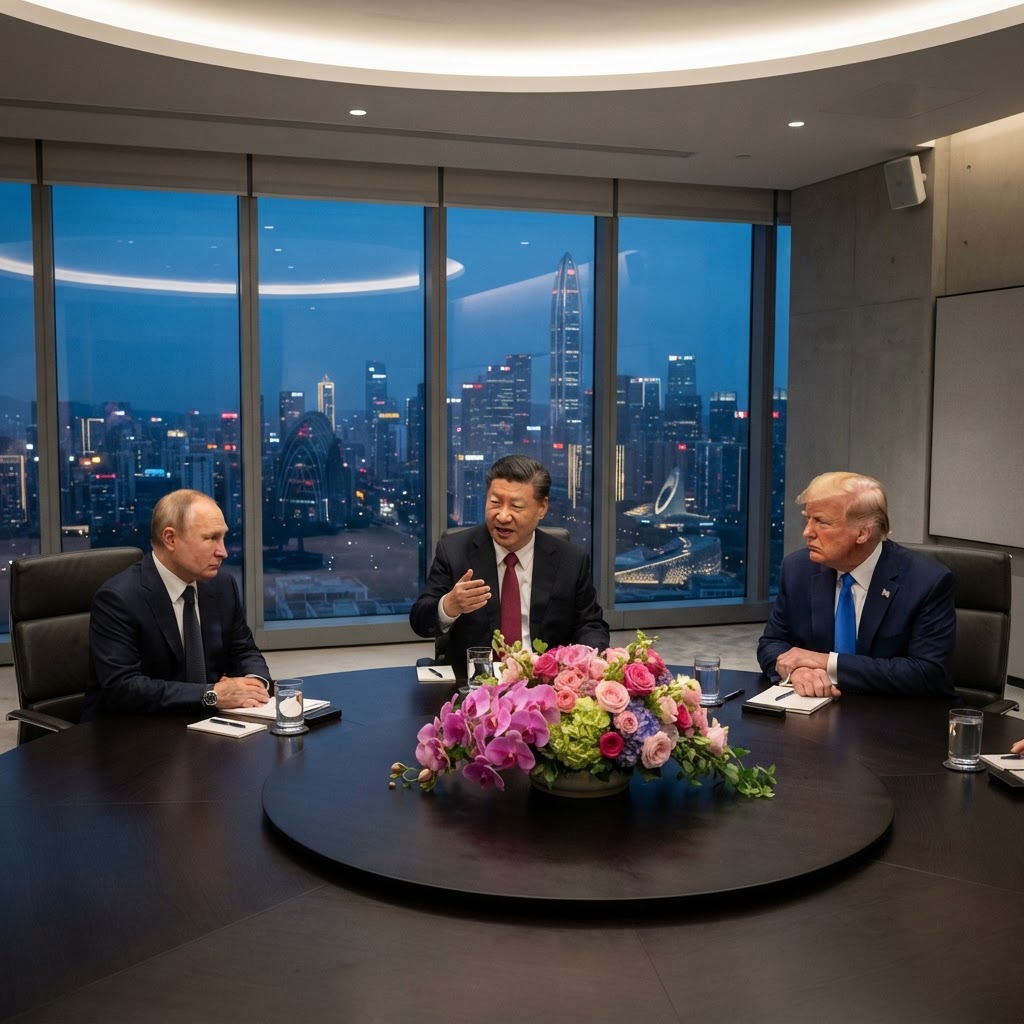
In a historic and highly symbolic gathering, President Donald Trump, Chinese President Xi Jinping, and Russian President Vladimir Putin convened in Shenzhen, China, for the first-ever trilateral summit between the three nations. While the leaders framed the discussions as an effort to safeguard global stability, the meeting has ignited widespread apprehension that the trio is working toward a multipolar world order specifically intended to erode the long-standing dominance of the United States. Analysts suggest the summit serves as a platform for Beijing and Moscow to project their growing clout while potentially sidelining traditional Western alliances.
The optics of the event were particularly striking, with President Xi breaking diplomatic protocol to personally welcome President Trump at the airport. This gesture, coupled with the leaders' closed-door discussions at Kylin Villa, has led critics to argue that the summit provides a veneer of legitimacy to the participants' respective agendas. For Vladimir Putin, the meeting offers a stage to project an image of a peacemaker despite the ongoing conflict in Ukraine, while Xi Jinping appears to be positioning China as the central architect of a new global framework that challenges the status quo.
Discussions reportedly touched on sensitive topics, including nuclear disarmament, the war in Ukraine, and regional security. However, observers noted a significant lack of substantive breakthroughs. While President Trump emphasized the unique position of the three powers to reduce nuclear risks, the divergent goals of the participants—ranging from Russia's desire for favorable terms in Ukraine to China's focus on economic stability and regional dominance—suggest that the summit was more about geopolitical posturing than concrete policy shifts.
Concerns remain that the three leaders may be attempting to carve the globe into spheres of influence, potentially making critical decisions regarding international conflicts without the input of affected nations or European partners. By collectively criticizing international institutions like the International Criminal Court, the leaders have signaled a shared disdain for established human rights frameworks, further fueling fears that this trilateral alignment is fundamentally aimed at usurping U.S. power and rewriting the rules of international engagement to favor autocratic interests.
RELATED DISPATCHES


Discussion (0)
No comments yet. Be the first to join the discussion.