The Political Strategy Behind Demands to Disavow the Muslim Brotherhood
A recent confrontation at a Michigan town hall highlights how political opponents use specific terminology to question a candidate's loyalties.
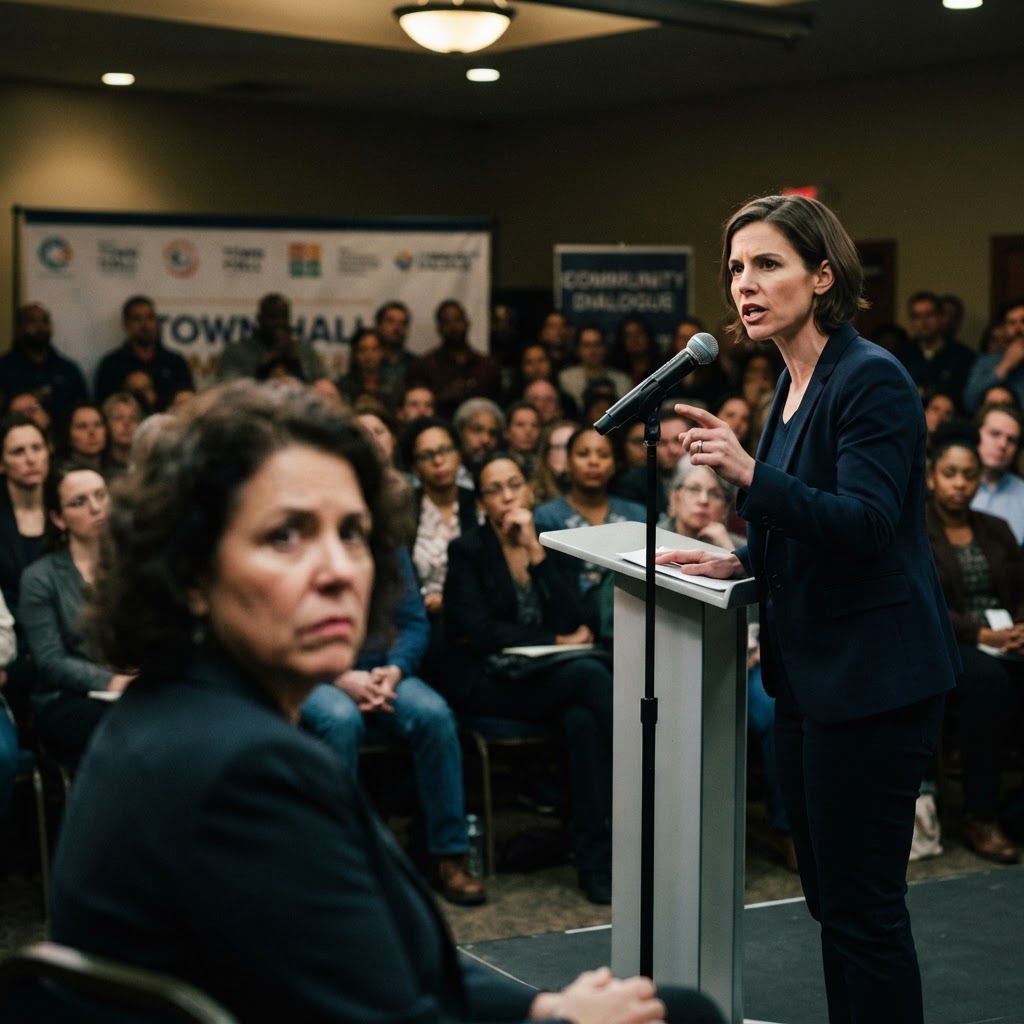
During a recent campaign event in Caro, Michigan, Democratic Senate nominee Abdul El-Sayed faced a pointed inquiry from an audience member who demanded he 'disavow' the Muslim Brotherhood. While El-Sayed provided an immediate affirmative response, the exchange quickly escalated into a broader debate regarding the underlying motives of such questions. El-Sayed challenged the premise of the inquiry, suggesting it was rooted in an implicit assumption of dual loyalties based on his faith and background.
The term 'disavow' has become a recurring feature in modern political discourse, often used to force candidates into a defensive posture. By demanding a public rejection of a specific organization, political opponents aim to cast doubt on a candidate's patriotism or ideological alignment. This tactic is frequently employed to create a narrative that suggests a candidate harbors secret sympathies for controversial groups, regardless of their actual stated positions.
Republican figures, including GOP candidate Mike Rogers and former President Donald Trump, have sought to link El-Sayed to the organization, citing his family history and past political expressions. El-Sayed has pushed back against these characterizations, drawing parallels between the current scrutiny of his Islamic faith and the historical prejudice faced by John F. Kennedy during his 1960 presidential campaign. He argues that these questions are not genuine policy inquiries but are instead designed to alienate voters by invoking xenophobic tropes.
Political analysts note that the demand for a 'disavowal' serves as a powerful rhetorical tool because it forces the subject to validate the questioner's premise simply by answering. Even when a candidate explicitly condemns an organization, opponents may claim the response was insufficient or insincere to keep the controversy alive in the media cycle. This dynamic illustrates the increasingly polarized nature of campaign rhetoric, where the goal is often to define an opponent's character rather than debate substantive policy issues.
RELATED DISPATCHES
Discussion (0)
No comments yet. Be the first to join the discussion.