Supreme Court to Determine Fate of Trump Immigration Policies
The high court prepares to rule on critical challenges to asylum bans, detention practices, and deportation procedures.
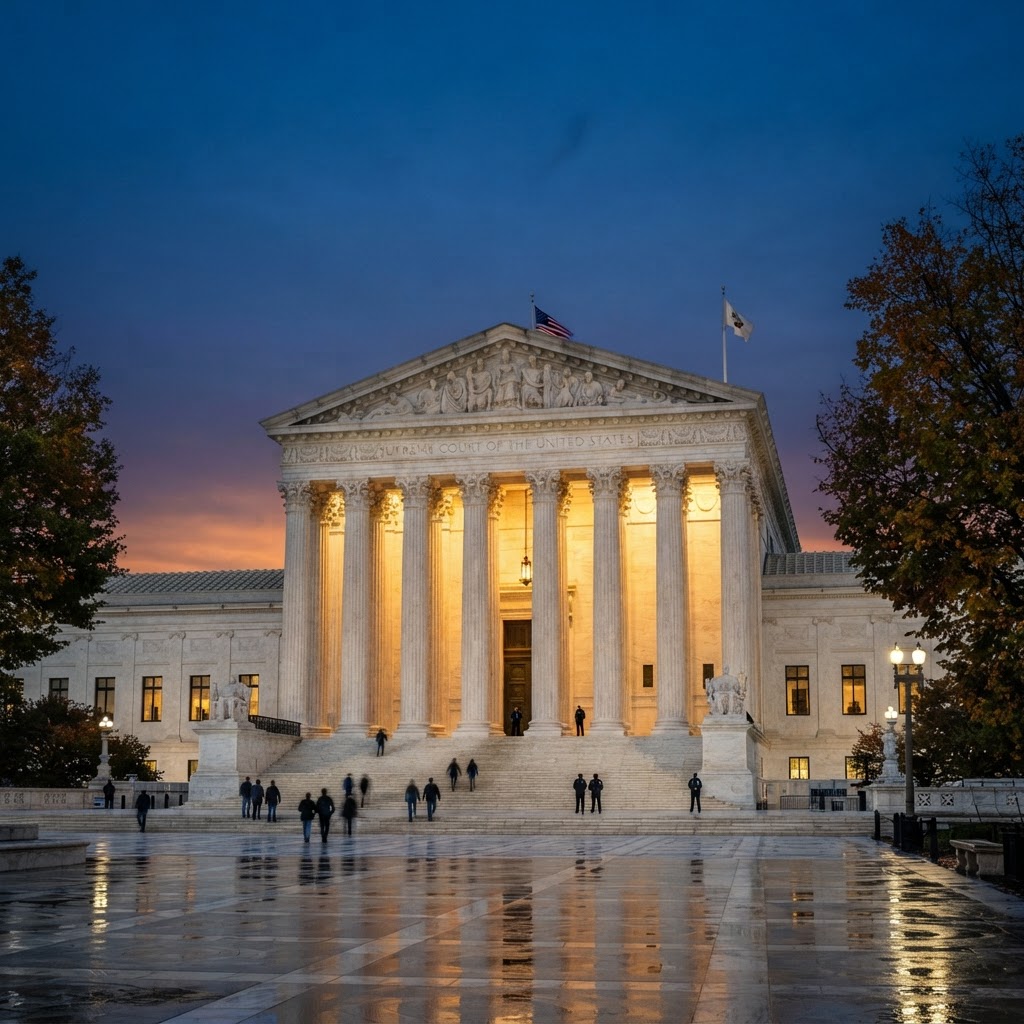
As the legislative branch remains largely sidelined, the U.S. Supreme Court has emerged as the final arbiter for the Trump administration’s aggressive immigration agenda. The justices are scheduled to hear a series of high-stakes cases during the 2026-27 term that could fundamentally reshape how the United States manages its borders and treats noncitizens. These upcoming rulings are expected to address whether the executive branch possesses the unilateral authority to bypass established federal statutes in favor of more restrictive enforcement measures.
Central to the court's docket is a challenge to the administration’s categorical suspension of asylum claims at the U.S.-Mexico border. The government argues that the president has the inherent power to block entry and deny asylum applications during periods of high border activity, which officials have characterized as an ongoing invasion. Conversely, immigrant rights advocates and legal experts contend that such a policy constitutes an unlawful overreach that ignores protections explicitly mandated by Congress.
Beyond the asylum ban, the Supreme Court is set to review the legality of the administration’s expanded use of mandatory detention. This case examines whether the government can hold individuals apprehended within the country indefinitely without providing them the opportunity for a formal hearing. Critics argue that these detention practices violate fundamental due process rights, while the administration maintains that such measures are necessary to maintain national security and manage the influx of unauthorized arrivals.
Another significant legal battle involves the government’s practice of removing immigrants to third-party countries—nations other than their country of origin. Plaintiffs in these cases have raised alarms over the lack of procedural safeguards, noting that individuals are often sent to unfamiliar territories where they may face severe persecution or torture. The court will evaluate whether these removals, which often occur with minimal notice and limited access to legal counsel, satisfy constitutional requirements.
With decisions anticipated by late June, the outcomes of these cases will likely define the boundaries of presidential power regarding immigration for years to come. As the judiciary prepares to weigh in, the legal community remains focused on whether the court will uphold the administration's executive actions or reaffirm the primacy of existing federal immigration law.
RELATED DISPATCHES



Discussion (0)
No comments yet. Be the first to join the discussion.