Search Operations Persist for Hundreds Missing in Hydropower Flood Disaster
Rescue teams continue to comb through debris and tunnels nearly a month after catastrophic flash floods struck the Nepal-Tibet border.
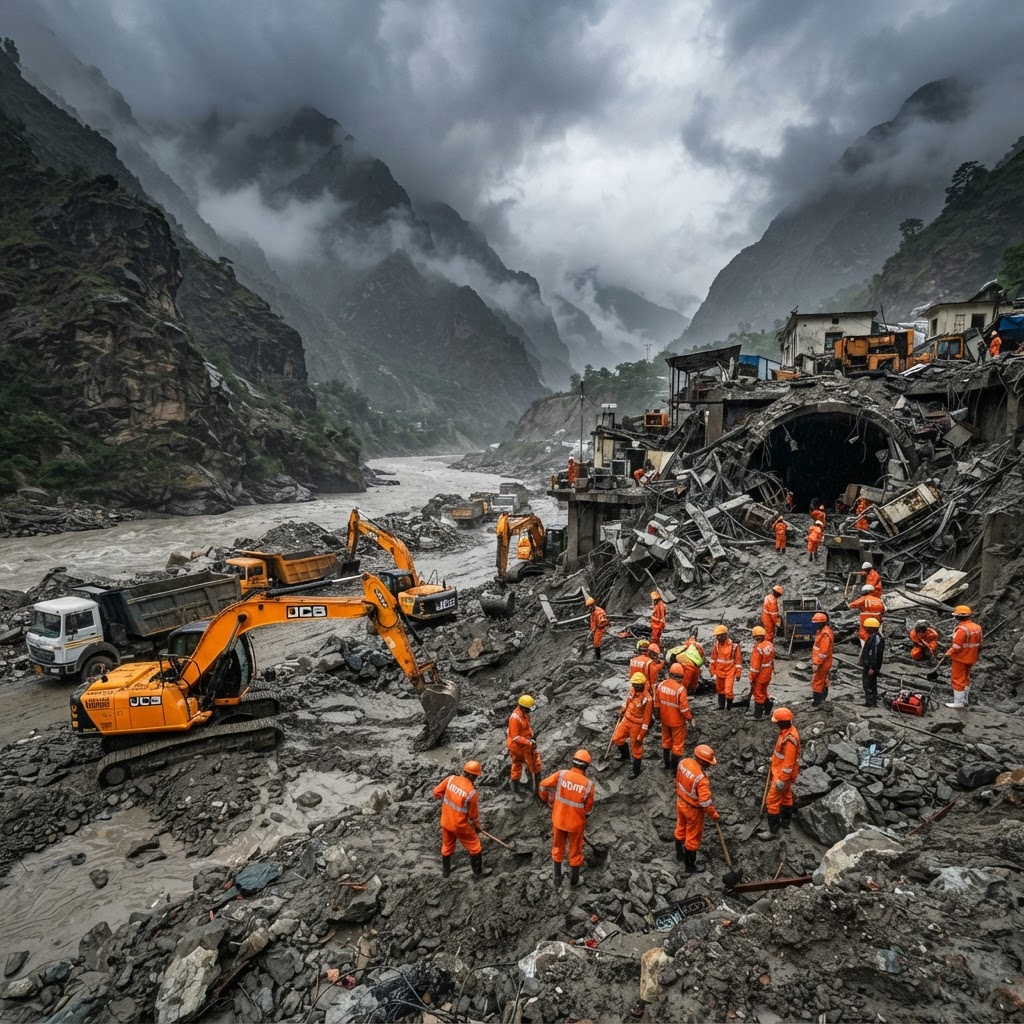
Nearly four weeks after devastating flash floods swept through the Nepal-Tibet border region, emergency responders are still engaged in a massive search and rescue operation. The disaster, which originated on August 26, 2026, triggered widespread destruction, leaving thousands of people unaccounted for and causing significant loss of life across the region.
Primary focus remains on the damaged hydropower infrastructure in districts such as Rasuwa and Nuwakot. Authorities report that at least 12 major energy projects were severely impacted by the deluge, which sent torrents of mud and debris into underground tunnels where many workers were stationed. The Rasuwagadhi and Upper Trishuli-1 projects have been central to these recovery efforts, as teams work to clear blocked passages and locate those still trapped beneath the sediment.
Rescue operations have been fraught with difficulty due to the treacherous terrain and structural instability of the affected sites. In some instances, specialized technical teams have utilized controlled explosions and heavy machinery to breach mud-filled tunnels. While hundreds of workers were successfully evacuated in the immediate aftermath of the flooding, the recovery of victims has been slow, with rescuers recently pulling bodies from the debris of the Chilime and Trishuli sites.
Beyond the immediate search for survivors, the disaster has created a complex humanitarian crisis. Families of the missing continue to wait for news, while authorities face the daunting task of identifying recovered remains, often requiring time-consuming DNA analysis due to the severity of the damage. The destruction of critical roads and bridges has further hampered access to remote areas, complicating the delivery of aid and the ongoing reconstruction efforts.
As the death toll continues to climb, the international community and local agencies remain committed to the search. The scale of the catastrophe has highlighted the extreme vulnerabilities of infrastructure in the Himalayan region to sudden, climate-driven flash floods. Officials emphasize that the mission remains a priority, even as the window for finding survivors narrows significantly with each passing day.
RELATED DISPATCHES


Discussion (0)
No comments yet. Be the first to join the discussion.