Political Crisis Deepens as Pakistan Imposes Emergency in Khyber Pakhtunkhwa
Federal authorities suspend provincial government in Khyber Pakhtunkhwa amid escalating tensions with the PTI.
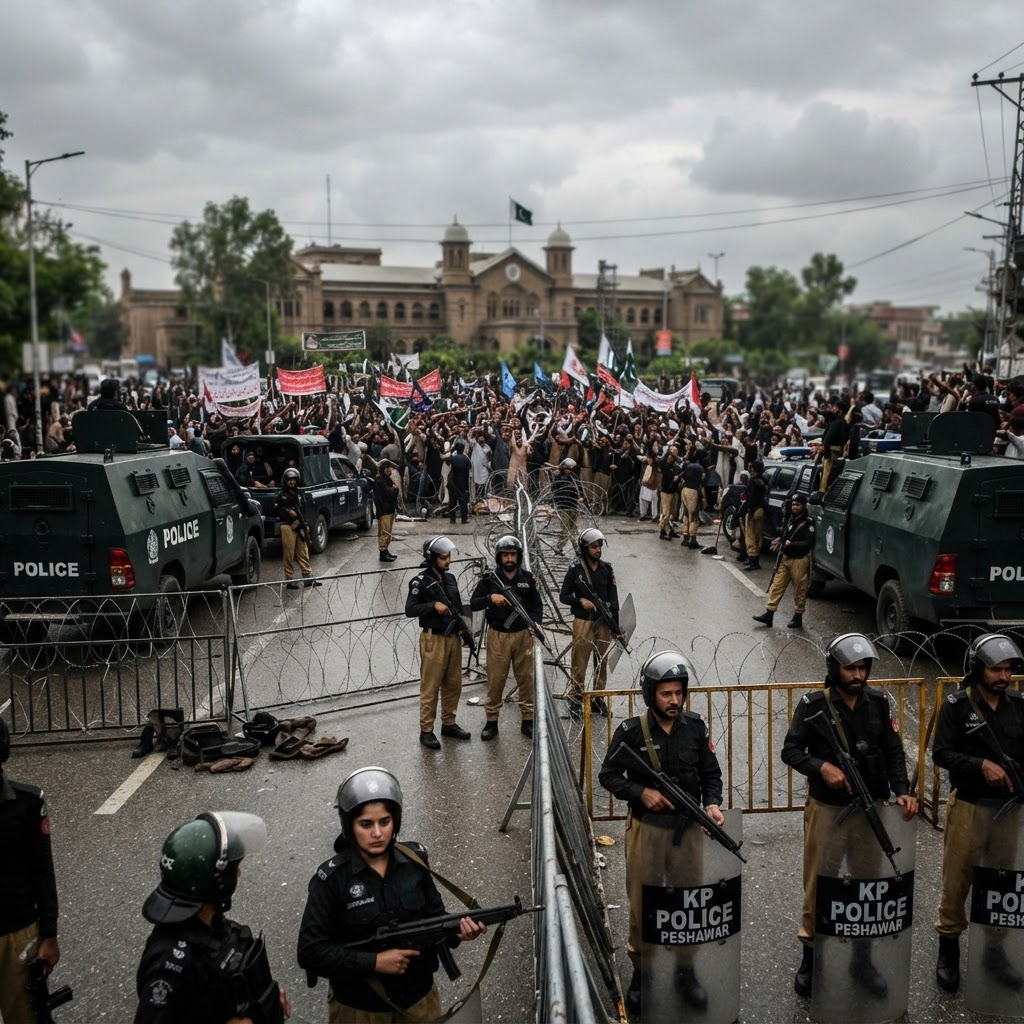
The federal government of Pakistan has officially declared a state of emergency in the Khyber Pakhtunkhwa province, effectively suspending the local administration led by the Pakistan Tehreek-e-Insaf (PTI) party. This drastic measure, enacted on October 11, 2026, follows a period of intense political friction and concerns regarding regional security. By invoking emergency powers, the federal government has assumed direct executive and legislative control over the province, a move that has drawn sharp criticism from opposition leaders who have characterized the action as a de facto coup [3, 5, 8].
The decision comes against the backdrop of a prolonged standoff between the current administration and supporters of jailed former Prime Minister Imran Khan. Tensions reached a boiling point recently when protests in the region turned violent, with reports indicating that police utilized tear gas and live ammunition against demonstrators [4, 9]. The federal government has justified the intervention by citing a deteriorating security environment and the need to restore constitutional order, though the move has sparked fears of further instability across the country [5, 9].
Political analysts suggest that this escalation marks a significant turning point in the ongoing power struggle within Pakistan. The PTI has vehemently denounced the suspension of the provincial government, arguing that the federal authorities are undermining democratic processes to suppress political dissent. As the situation remains fluid, there is growing concern that the lockdown of what is considered an opposition stronghold could backfire, potentially fueling further civil unrest rather than resolving the underlying political grievances [8, 9].
Meanwhile, the broader national landscape remains complex as the country navigates multiple challenges. While the government manages this internal crisis, it is also engaging in international diplomacy and addressing economic indicators, including projected inflation rates [2, 5]. The international community continues to monitor the situation closely, as the stability of the region remains a critical concern for both domestic governance and broader geopolitical interests [5, 9].
RELATED DISPATCHES
Discussion (0)
No comments yet. Be the first to join the discussion.