Netanyahu Proposes Rotational Premiership to Rival Eisenkot
In a major concession, the Prime Minister offers to step aside first to facilitate a national unity government.
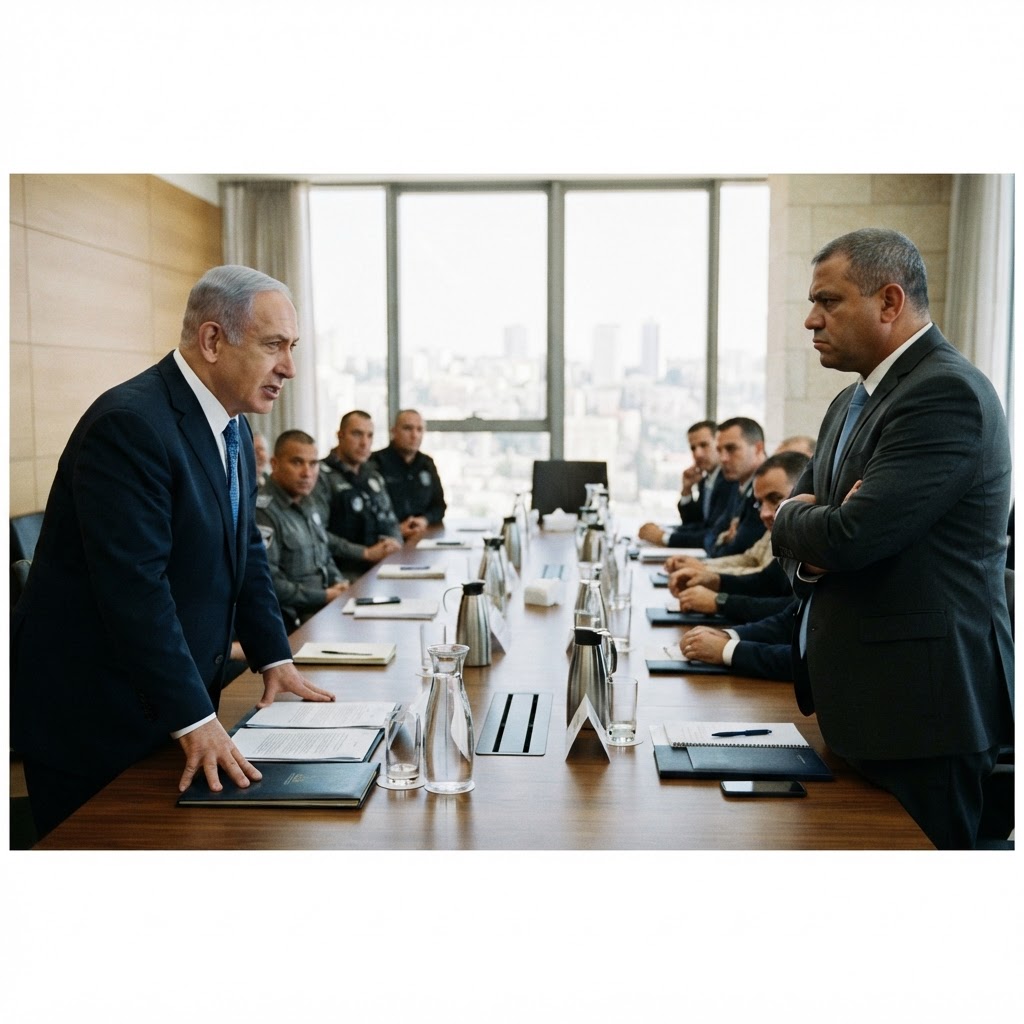
In a significant shift in Israel's political landscape, Prime Minister Benjamin Netanyahu has announced his willingness to relinquish the top spot in a power-sharing arrangement. Netanyahu, whose Likud party remains the largest in the Knesset, stated he is prepared to allow his primary rival, Gadi Eisenkot of the Yashar party, to serve as the first prime minister in a rotating government. This proposal marks a departure from the traditional principle that the leader of the largest party should hold the premiership.
Netanyahu framed the offer as a necessary measure to address what he described as an existential threat facing the nation. He argued that the current political climate requires a broad coalition capable of securing Israel's future, urging his counterparts to set aside partisan differences. Under the proposed terms, Netanyahu would serve as the alternate prime minister during the initial phase of the term.
Gadi Eisenkot, who is currently tasked with forming a new government before the December 6 deadline, responded with cautious skepticism. While he expressed a willingness to test the sincerity of the offer, he noted that his team had previously submitted a detailed proposal through confidential channels that had gone unanswered for weeks. Eisenkot emphasized that any potential agreement must prioritize substantive policy issues over the mere distribution of ministerial seats.
The two leaders are scheduled to meet at the Dan Accadia Hotel in Herzliya to conduct formal negotiations. The outcome of these talks remains uncertain, as Eisenkot continues to coordinate with his existing bloc partners. Critics of the proposal, including some opposition figures, have warned that the offer might be a tactical maneuver intended to stall the formation of an alternative government rather than a genuine attempt at unity.
This development follows intense pressure on Netanyahu to break the ongoing election deadlock. With both the Likud-led bloc and the opposition falling short of a clear parliamentary majority, the prospect of a unity government has become a focal point of intense political maneuvering. As the deadline for government formation approaches, the coming days will be critical in determining whether this rotational deal can bridge the deep divisions within the Israeli political arena.
RELATED DISPATCHES



Discussion (0)
No comments yet. Be the first to join the discussion.