Netanyahu Proposes Power-Sharing Deal with Rival Eisenkot
Caretaker Prime Minister offers to serve second in a rotating premiership to break the ongoing political deadlock.
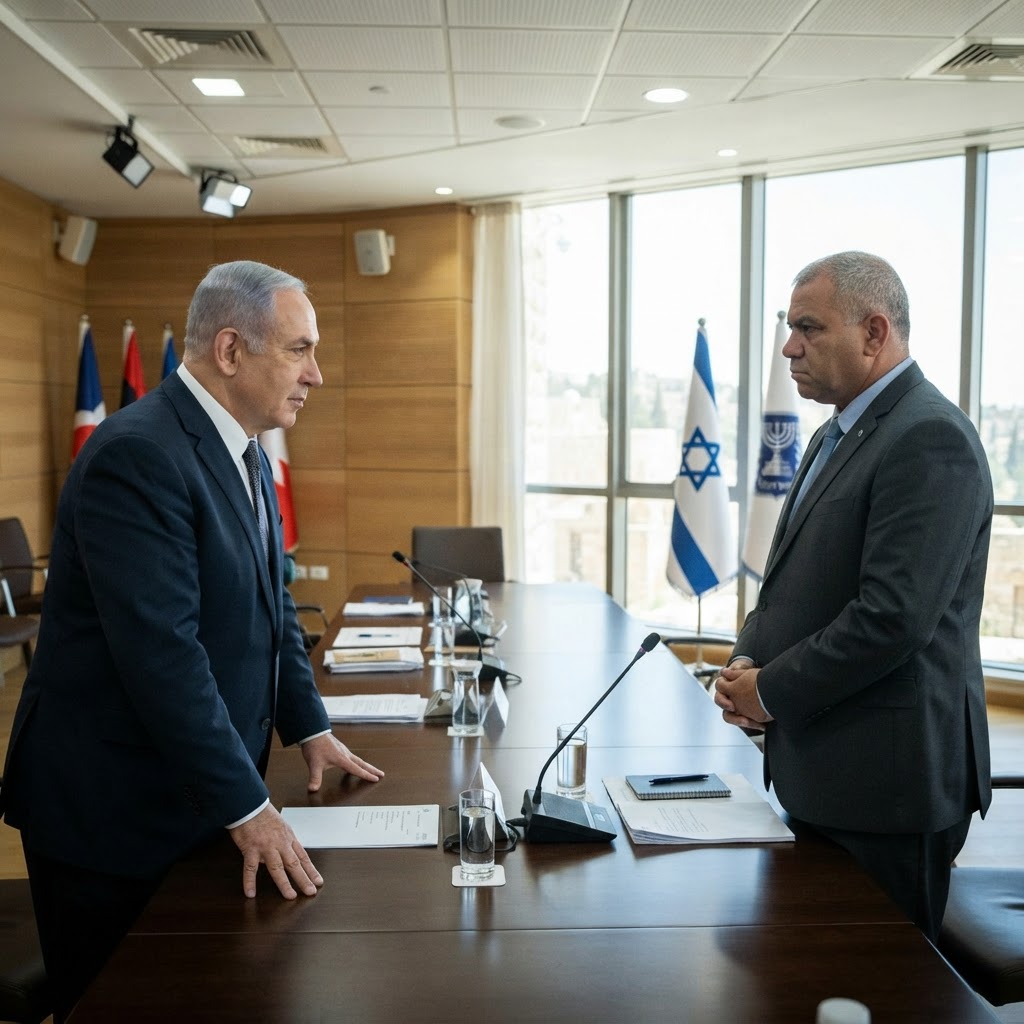
In a significant shift, caretaker Prime Minister Benjamin Netanyahu has publicly proposed a rotating unity government that would allow his political rival, Gadi Eisenkot, to serve as prime minister first. Netanyahu, who has led the Likud party for years, stated that the current security climate necessitates setting aside his previous insistence on leading the government as the head of the largest party. Under this proposed arrangement, Netanyahu would transition to the role of alternate prime minister at the start of the term.
The offer follows weeks of stalled negotiations and mounting pressure as Eisenkot, who was tasked by the president with forming a new coalition, nears his deadline. While Netanyahu framed the proposal as a necessary step for national stability, many of his political opponents remain deeply skeptical. Critics, including members of the opposition, have dismissed the move as a tactical maneuver designed to delay the formation of an alternative government and prevent Netanyahu from being ousted from power.
Gadi Eisenkot, leader of the Yashar party, has responded with cautious interest, inviting Netanyahu’s team to engage in accelerated, genuine negotiations to determine if the offer is sincere. Eisenkot noted that his team had previously attempted to open a dialogue through secret channels without success. He emphasized that any potential agreement must be based on substantive policy and values rather than just the distribution of ministerial seats.
The political landscape remains volatile as the December deadline for forming a government approaches. Eisenkot’s bloc currently lacks a clear parliamentary majority, and the success of any unity deal depends on whether he can secure the support of his existing partners while navigating the complexities of a partnership with Likud. Past experiences with rotation agreements in Israel have left a legacy of distrust, with many observers recalling previous failed attempts at power-sharing that resulted in political collapse.
As both leaders prepare for direct talks, the public and political allies are watching closely to see if this latest proposal will lead to a breakthrough or if it is merely another chapter in the country's prolonged electoral crisis. While some Likud ministers have voiced support for the compromise, others in the opposition continue to urge Eisenkot to finalize a government without Netanyahu, citing a lack of faith in the Prime Minister's commitment to the deal.
RELATED DISPATCHES



Discussion (0)
No comments yet. Be the first to join the discussion.