Myanmar Military Deploys Paramotors for Aerial Strikes on Rebel-Held Regions
The regime is increasingly utilizing low-cost motorized paragliders to conduct lethal bombing raids against civilian and opposition-controlled areas.
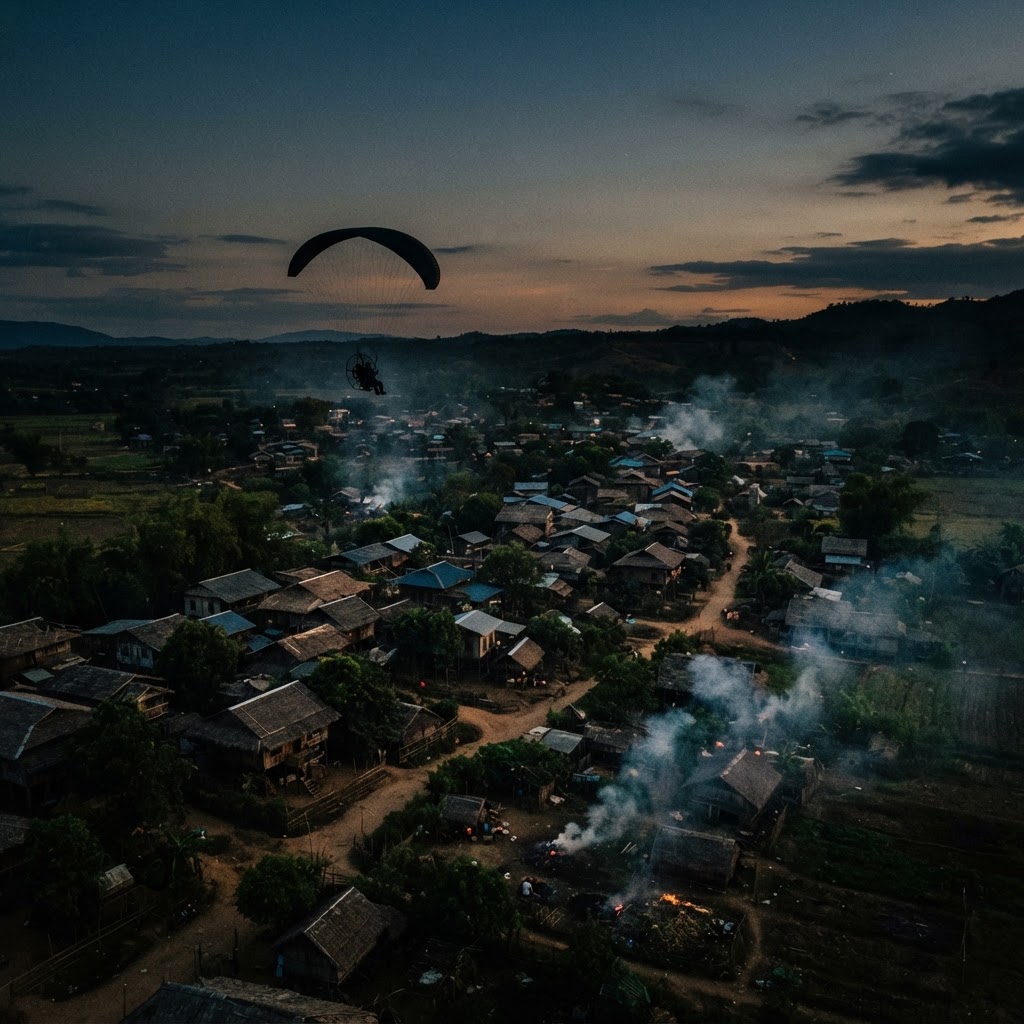
The Myanmar military has adopted a controversial and deadly new tactic in its ongoing conflict, utilizing motorized paragliders, or paramotors, to execute aerial bombardments. These lightweight, low-altitude aircraft have become a signature tool for the regime, allowing for surprise attacks on towns and villages that are currently under the control of resistance forces. According to recent reports, this shift toward low-cost aerial warfare has significantly escalated the danger to non-combatants across the country.
International observers and United Nations investigators have documented a marked increase in the use of these flying machines, alongside drones and gyrocopters, to drop unguided explosives. The deployment of these aircraft is often characterized by sudden, low-altitude raids that leave little time for civilians to seek cover. In one particularly harrowing incident in the Sagaing Region, a paramotor strike on a public gathering resulted in dozens of casualties, including children, sparking widespread condemnation.
Analysts suggest that the military’s reliance on these unconventional aircraft is a strategic attempt to exert pressure on ethnic armed groups and resistance fighters. By targeting civilian infrastructure and public events, the regime appears to be using indiscriminate violence as a mechanism to force opposition groups into negotiations or to disrupt their administrative control over captured territories. This strategy has been particularly noted in regions where the military faces significant challenges from well-organized ethnic armies.
Furthermore, the humanitarian impact of these strikes is compounded by the reported use of 'double-tap' tactics, where a secondary strike is launched shortly after the first. This method specifically endangers first responders, medical personnel, and civilians attempting to flee or assist the wounded. The escalation of these aerial attacks has been linked to broader political timelines, including periods surrounding military-organized elections, indicating a calculated effort to suppress dissent through terror.
As the conflict continues to evolve, the use of such accessible technology highlights the changing nature of the war in Myanmar. While the military maintains that these operations are directed at opposition forces, the consistent reports of civilian deaths suggest a broader campaign of intimidation. International human rights organizations continue to monitor the situation, calling for accountability as the regime persists in its use of these lethal, low-cost aerial assets.
RELATED DISPATCHES



Discussion (0)
No comments yet. Be the first to join the discussion.