Kansas City Fed President Schmid Defends Recent Rate Hike
Jeff Schmid emphasizes that broad inflationary pressures necessitate continued policy tightening to reach the 2% target.
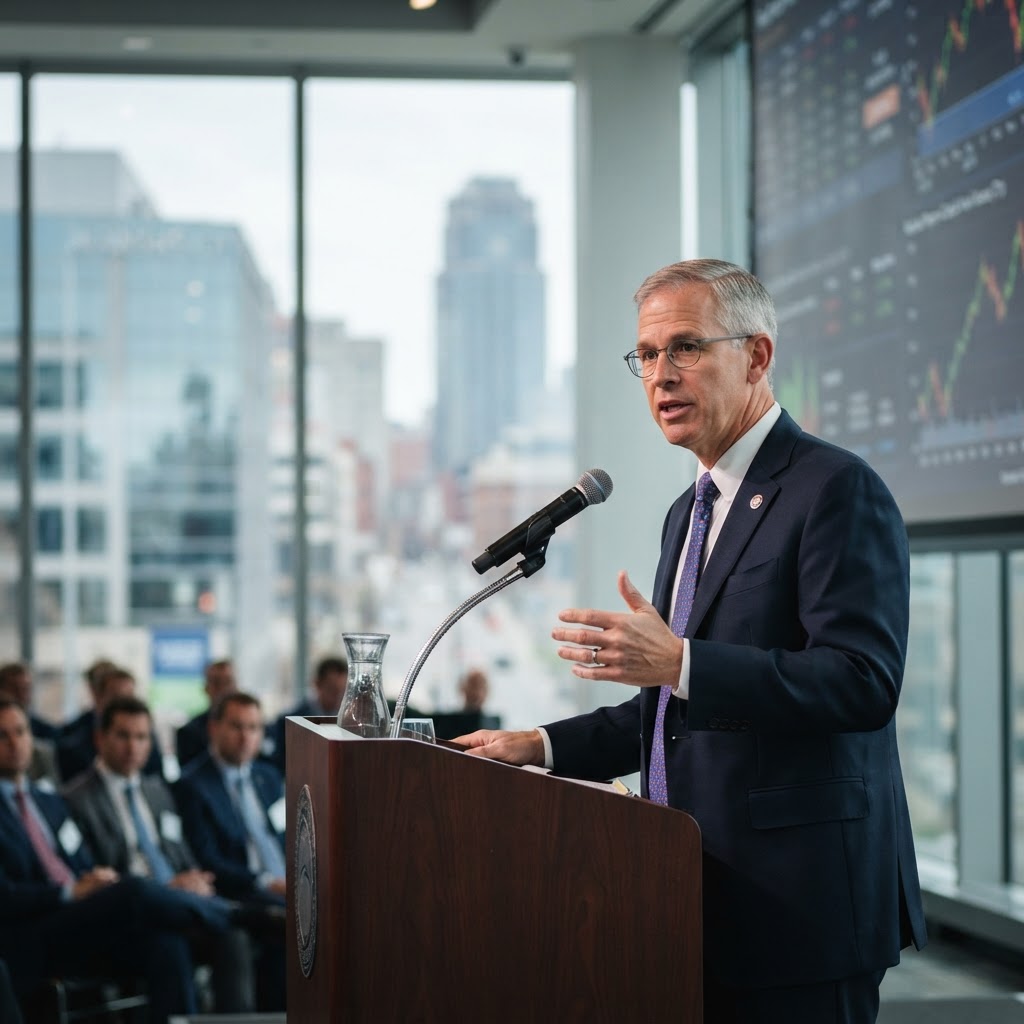
Federal Reserve Bank of Kansas City President Jeff Schmid recently affirmed his support for the central bank's latest interest-rate increase, characterizing the move as a vital component in the ongoing effort to stabilize the economy. According to Schmid, the decision was driven by persistent inflationary trends that have pushed price growth above 3%, signaling that the current economic environment requires a firm policy response. He noted that this adjustment is a necessary step toward guiding the economy back to the Federal Reserve’s long-term 2% inflation objective [1, 3, 4].
Addressing the scope of the current price instability, Schmid clarified that the issue extends well beyond the volatile energy sector. He pointed out that broad-based price growth has been observed across a wide array of goods and services, indicating that inflation has become deeply embedded in the economy. This assessment suggests that supply and demand imbalances are currently exerting significant upward pressure on costs, necessitating a more comprehensive approach to monetary policy [2, 4, 7].
Despite the challenges posed by elevated inflation, Schmid offered a relatively optimistic view of the broader economic landscape. He described the labor market as balanced and characterized overall economic growth as solid. By maintaining a restrictive policy stance, the Federal Reserve aims to address these imbalances without undermining the underlying strength of the economy [2, 4, 9].
Ultimately, Schmid’s comments underscore the Fed's commitment to curbing inflation through continued vigilance. By framing the rate hike as a strategic maneuver to restore price stability, he highlighted the central bank's resolve to prevent inflation from becoming entrenched. As the Fed continues to monitor incoming data, officials remain focused on ensuring that monetary policy remains sufficiently tight to bring the economy back into alignment with its stated goals [3, 4, 8].
RELATED DISPATCHES



Discussion (0)
No comments yet. Be the first to join the discussion.