Israel Faces Political Impasse Following Indecisive Election Results
Neither Prime Minister Benjamin Netanyahu nor opposition leader Gadi Eisenkot secured a parliamentary majority, triggering complex coalition negotiations.
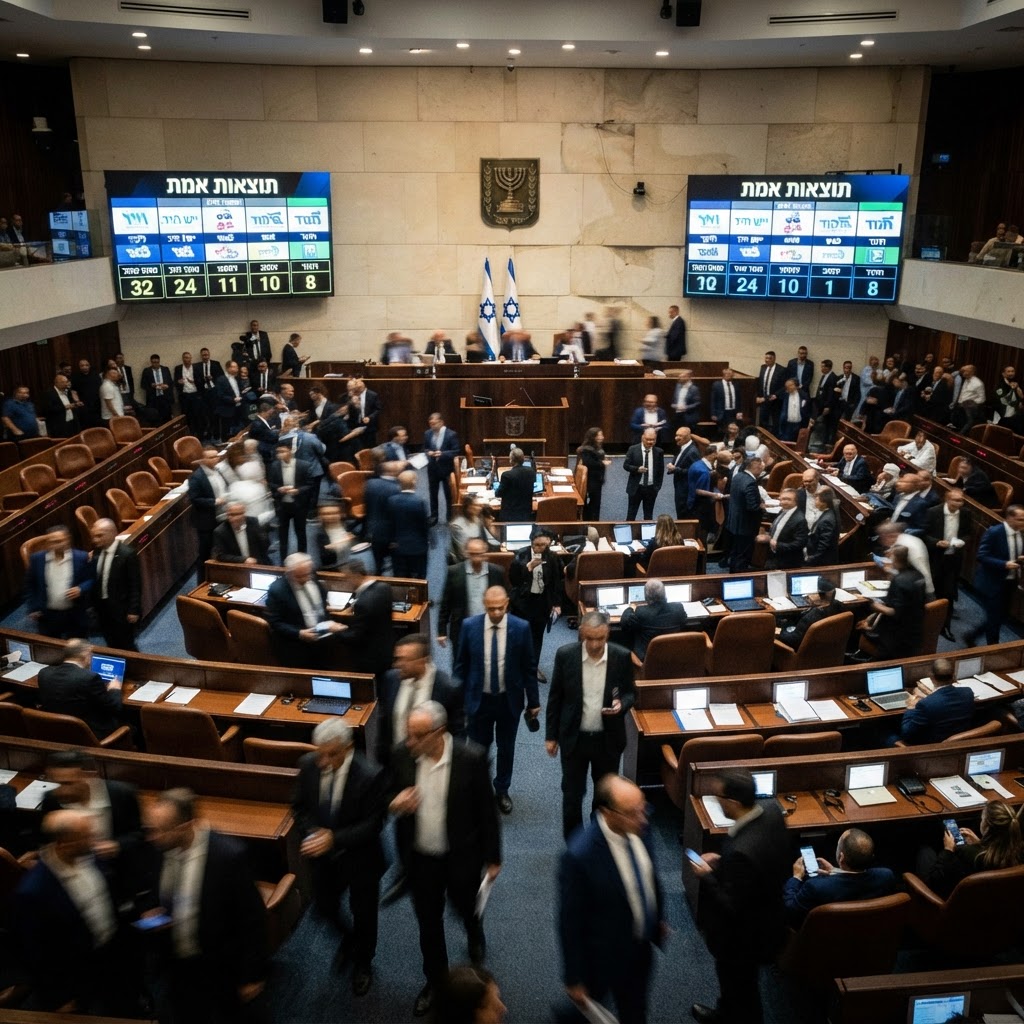
Following the recent national elections, Israel has entered a period of intense political uncertainty as vote tallies confirm that neither the incumbent right-wing coalition led by Prime Minister Benjamin Netanyahu nor the opposition alliance headed by Gadi Eisenkot has achieved the 61-seat threshold required for a majority in the 120-member Knesset [3]. With the final results now in, the nation faces a prolonged period of coalition wrangling that could stretch over several weeks or even months [3, 9].
Prime Minister Netanyahu’s current bloc fell short of the necessary support, leaving his political future in a precarious state [3, 8]. Despite the setback, Netanyahu remains in his position as a caretaker prime minister while negotiations unfold [3, 9]. Analysts suggest he may attempt to leverage this interim period to consolidate his standing or potentially court members from the opposition camp to bridge the gap to a majority [3, 8].
On the other side of the aisle, Gadi Eisenkot has declared the results a clear signal of public dissatisfaction with the current leadership [9]. However, his path to forming a government remains equally difficult [9]. While his bloc performed strongly, the opposition faces significant hurdles in securing enough partners to build a stable governing coalition, particularly given the deep ideological divisions regarding potential cooperation with Arab-led parties [8, 9, 10].
Smaller parties are now positioned as potential kingmakers in the upcoming talks [9, 10]. The role of Arab-led factions, in particular, remains a focal point of speculation, though historical tensions and campaign promises have complicated the possibility of their inclusion in either major bloc [8, 9, 10]. As party leaders begin the arduous process of backroom discussions, the prospect of another round of elections remains a looming, albeit undesirable, possibility if a consensus cannot be reached [9].
RELATED DISPATCHES

Corruption Emerges as a Defining and Costly Battleground in 2026 Midterms
25 minutes 58 seconds ago
Federal Judge Blocks Trump Administration Bid to Segregate California Ballots
26 minutes 7 seconds ago
Federal Criminal Probe Into Alaska Senate Race Intensifies
26 minutes 16 seconds agoDiscussion (0)
No comments yet. Be the first to join the discussion.