Inside the Kill Zone: The Drone-Dominated Front Line
A 700-mile stretch of the Russia-Ukraine war has transformed into a lethal, static corridor where constant aerial surveillance makes movement nearly impossible.
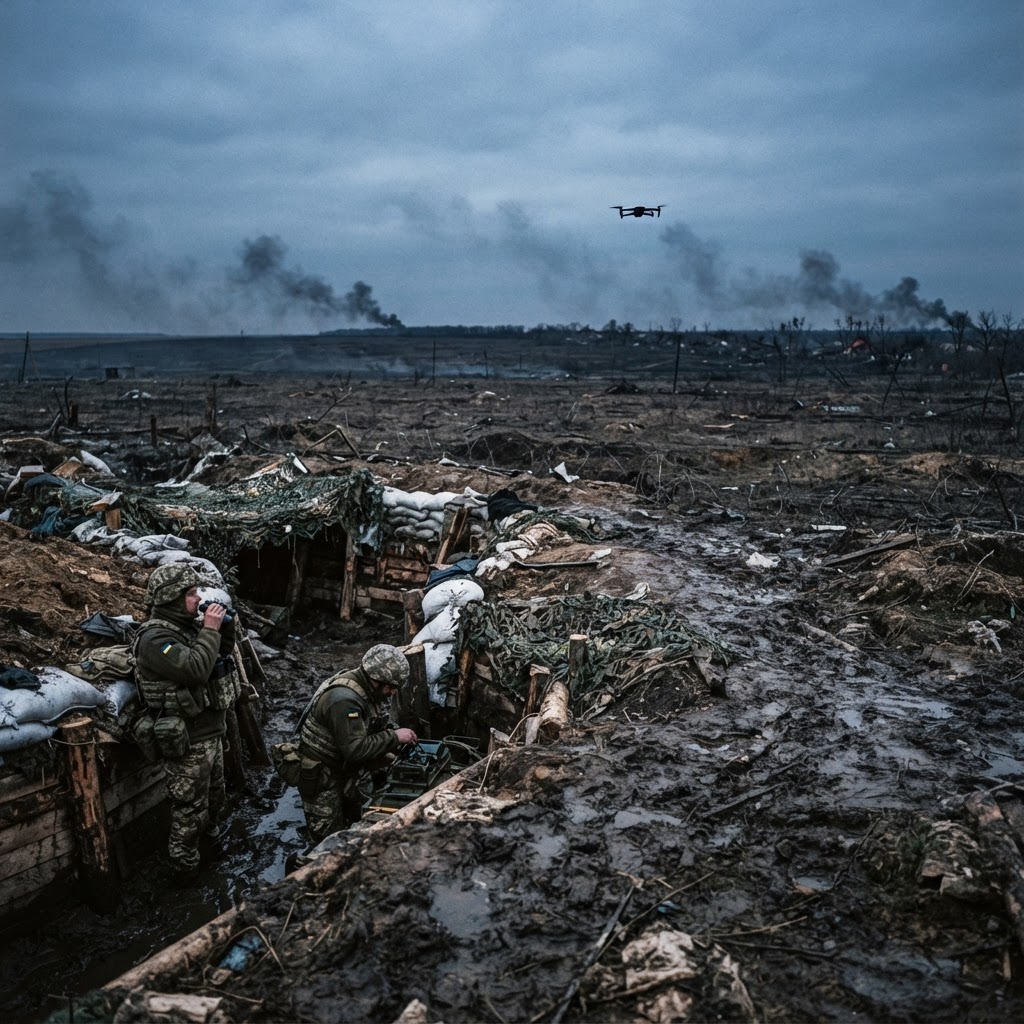
The front line of the Russia-Ukraine conflict has evolved into a deadly, static corridor often referred to as the 'kill zone.' Stretching over 700 miles, this territory has remained largely unchanged for four years, drawing comparisons to the grueling trench warfare of the early 20th century. However, unlike the conflicts of the past, this modern battlefield is defined by the omnipresence of drone technology, which has fundamentally altered the nature of combat.
This kill zone, typically spanning 10 to 20 miles on either side of the front, is a landscape of constant surveillance. Military analysts and soldiers on the ground describe it as a space where any sign of movement—even a soldier briefly emerging from a foxhole—can trigger an immediate strike. The saturation of drones is so intense that large-scale troop movements or the deployment of heavy armored vehicles have become nearly impossible without detection and subsequent bombardment.
For the soldiers stationed there, the environment is a paradox of modern warfare. Because of the relentless drone threat, many troops operate primarily as spotters, relaying coordinates to operators positioned further behind the lines. This shift has forced both sides to rely heavily on unmanned systems, with Ukraine increasingly deploying ground-based combat robots to handle high-risk tasks like supply delivery and casualty evacuation to minimize human exposure.
Nightfall offers no reprieve from the danger. Advanced thermal imaging on drones allows them to track body heat, making concealment difficult even in total darkness. As a result, the conflict has become a high-stakes game of hide-and-seek, where the ability to remain undetected is the primary factor for survival. Military officials note that this reliance on low-cost, unmanned systems is not just a tactical choice but a necessity to maintain operational endurance in an area where human presence is increasingly precarious.
RELATED DISPATCHES


Discussion (0)
No comments yet. Be the first to join the discussion.