Inside the Kill Zone: The Drone-Dominated Front Line
Modern warfare has evolved into a lethal, static corridor where constant aerial surveillance makes movement nearly impossible.
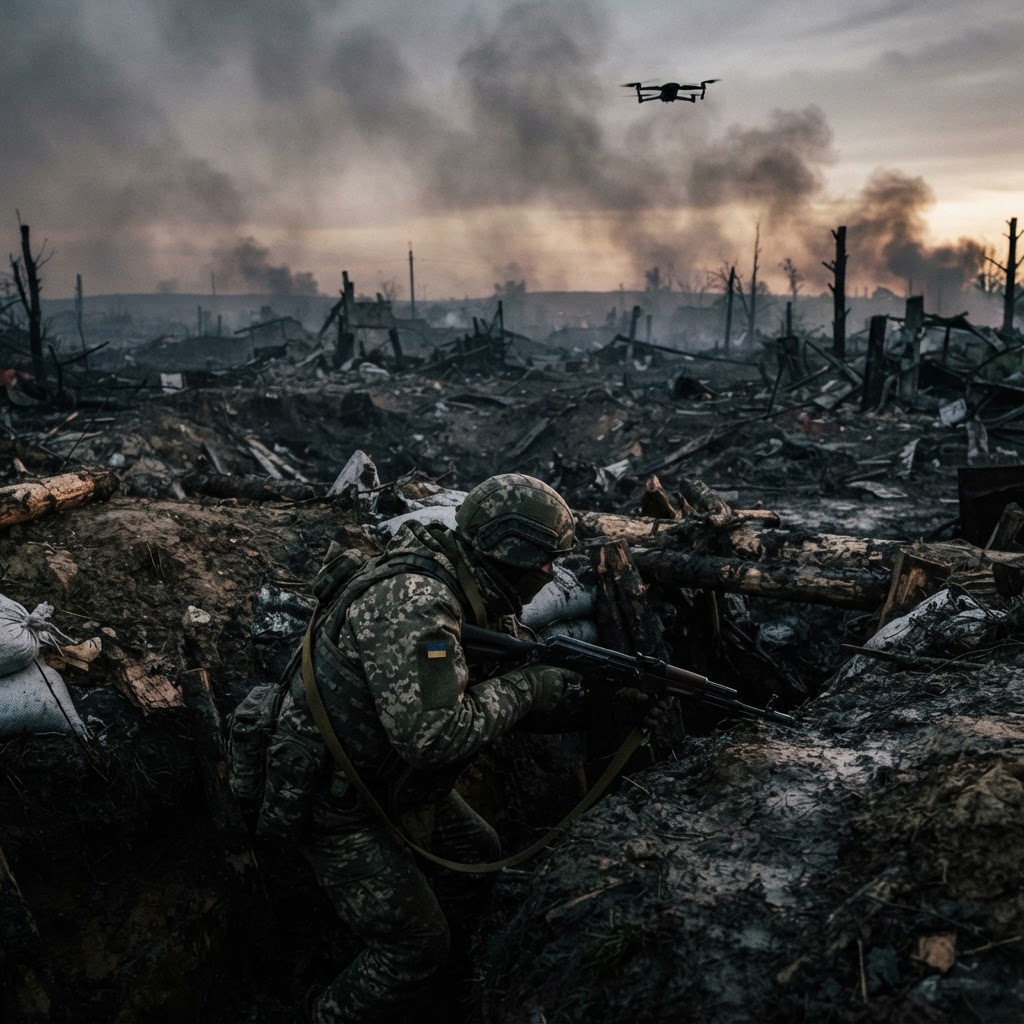
The front line of the Russia-Ukraine conflict has solidified into a harrowing landscape known as the 'kill zone.' Stretching over 700 miles, this strip of territory—often extending 15 to 50 kilometers deep on both sides—has become a graveyard for conventional military tactics. In this environment, the traditional massing of troops and heavy armor has been rendered obsolete by the relentless presence of surveillance and attack drones that hunt anything that moves.
This transformation has turned the battlefield into a high-stakes game of hide-and-seek. Soldiers are frequently forced to remain underground, operating in small, dispersed groups to avoid detection. The constant buzz of unmanned aerial vehicles overhead means that even minor movements, such as stepping out of a foxhole, can trigger immediate, precise strikes. As a result, the area has become a no-man’s-land where logistics and troop rotations are fraught with extreme danger.
Drone technology has fundamentally altered the nature of the conflict, creating an ecosystem where electronic warfare and aerial strikes dictate the pace of operations. Because of the high density of these systems, military commanders warn that approaching the front line without specialized equipment or absolute necessity is suicidal. The reliance on these tools has forced both sides to adapt, with Ukraine increasingly utilizing ground-based robots to deliver supplies, evacuate the wounded, and even mount defensive weaponry.
Ultimately, the kill zone represents a grim evolution in modern combat. With the front line remaining largely static for years, the conflict has devolved into a war of attrition defined by constant reconnaissance and precision strikes. As both armies continue to refine their drone capabilities, the corridor remains a testament to how rapidly technology can reshape the realities of war, leaving little room for survival for those caught in the open.
RELATED DISPATCHES


Discussion (0)
No comments yet. Be the first to join the discussion.