Inside the Kill Zone: How Drones Have Redefined the Front Line
A 700-mile stretch of territory has become a high-stakes, drone-dominated wasteland where movement is synonymous with danger.
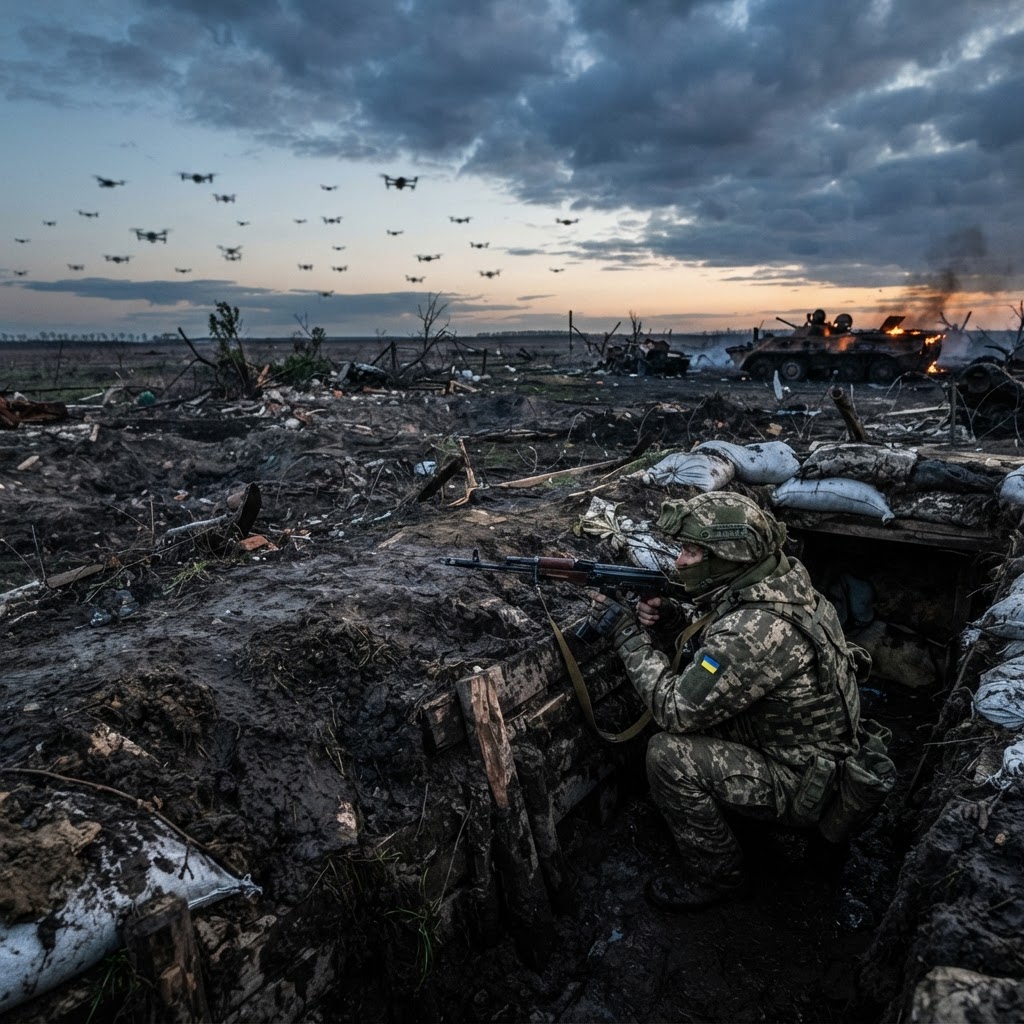
The front line of the conflict in Ukraine, stretching over 700 miles, has evolved into a static, high-tech wasteland often referred to as the 'Kill Zone.' Four years into the war, this corridor has become a lethal environment where traditional military maneuvers are largely impossible. Instead of large-scale infantry advances, the area is defined by a constant, terrifying game of hide-and-seek, where any sign of movement—even a soldier stepping out of a foxhole—can trigger an immediate strike from the skies.
Unmanned aerial vehicles (UAVs) have fundamentally altered the nature of this battlefield. First-person-view (FPV) drones, which provide operators with real-time visual targeting, have turned areas extending up to 20 kilometers from the front into death traps. These cheap but highly precise machines have rendered armored vehicles and tanks extremely vulnerable, forcing both sides to abandon conventional tactics in favor of subterranean survival. Soldiers now spend the vast majority of their time underground, attempting to remain invisible to the relentless surveillance buzzing overhead.
This saturation of drone technology has created a 'dead zone' where, in some sectors, the danger extends as far as 50 kilometers behind the line of contact. Military experts note that the density of drones, combined with mines and artillery, makes it nearly impossible for either side to assemble a significant ground force without being detected. Consequently, the front line is held by small, dispersed groups of infantry who act primarily as spotters, relaying coordinates to drone operators stationed further back.
As the conflict continues, the integration of artificial intelligence is further accelerating the lethality of these systems. New AI-driven models are being deployed to predict enemy drone activity and optimize artillery planning, ensuring that the 'Kill Zone' remains a testing ground for the future of warfare. With both nations rapidly iterating on their drone capabilities and electronic warfare defenses, the front line remains a volatile, unforgiving space where survival depends entirely on the ability to stay hidden from the eyes in the sky.
RELATED DISPATCHES


Discussion (0)
No comments yet. Be the first to join the discussion.