GOP Senate Candidates in Michigan and Kansas Navigate Distance from Trump
Republican nominees are increasingly sidestepping the former president to appeal to swing voters amid shifting political tides.
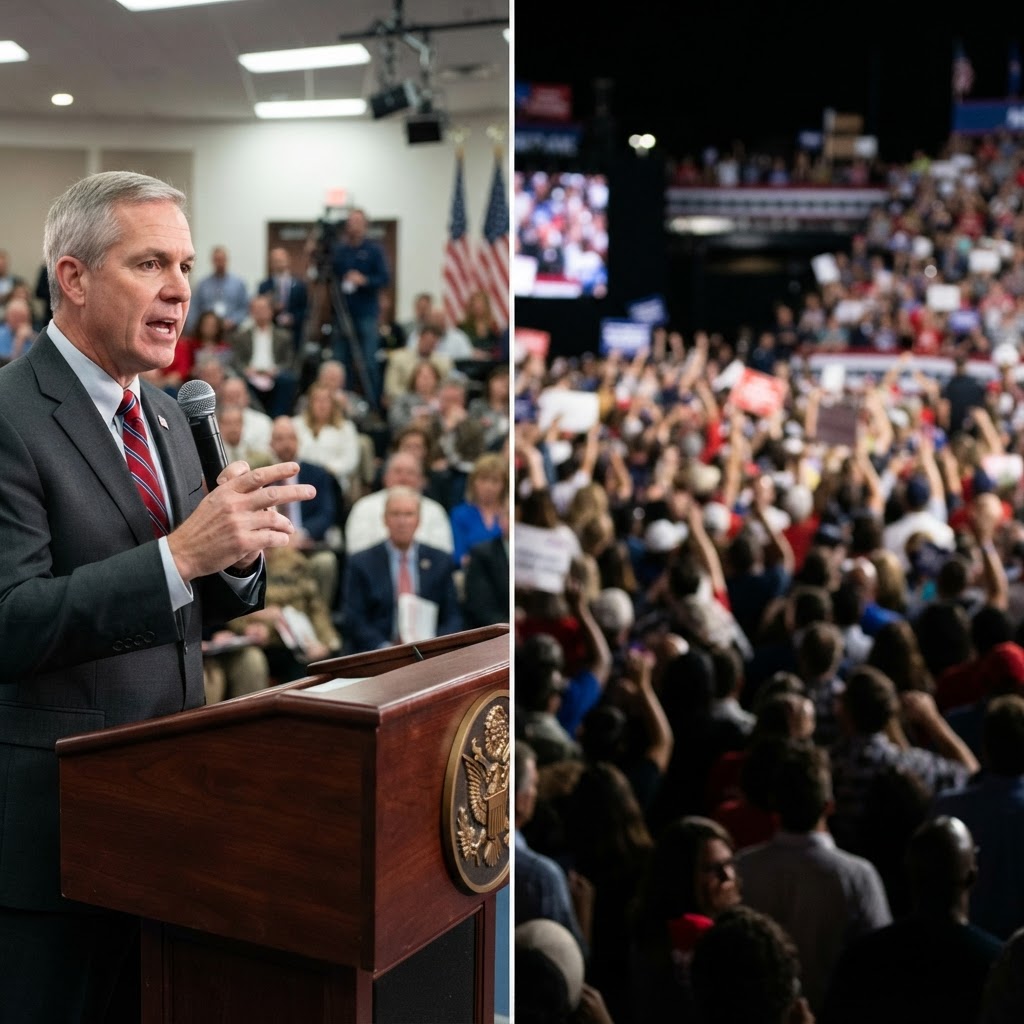
As the 2026 midterm elections approach, Republican candidates in critical Senate races are adopting a calculated strategy of separation from Donald Trump. In states like Michigan and Kansas, GOP hopefuls are finding that tethering their campaigns too closely to the former president may alienate the independent and unaffiliated voters necessary to secure a victory. This shift reflects a broader trend where candidates are prioritizing local economic concerns over party orthodoxy.
In Michigan, former Congressman Mike Rogers has notably broken with Trump regarding trade policy. Rogers has publicly criticized the administration's aggressive tariff stance on Canadian goods, labeling the trade war as economically damaging to the region. By taking this position, Rogers aims to address the specific financial anxieties of his constituents, even if it means directly contradicting the former president’s protectionist agenda.
Meanwhile, the political landscape in Kansas has seen a similarly complex dynamic. While the state remains a Republican stronghold, the Senate race has tightened significantly, forcing candidates to balance base mobilization with broader electoral appeal. During recent debates, the focus has frequently shifted toward economic affordability and national security, with some candidates opting for a generalized stiff arm toward national party leadership rather than engaging in a full-throated defense of Trump’s policies.
Political analysts suggest that this distancing is a response to Trump’s declining approval ratings and voter frustration over issues like inflation and foreign conflicts. GOP pollsters have noted that the party faces a voter turnout challenge, necessitating a coalition that extends well beyond the former president’s core base. Consequently, many nominees are attempting to craft a more independent identity to win over moderate voters who are wary of the current political climate.
Despite these efforts to create space, the influence of the former president remains a potent force in Republican primaries and general election strategy. While some candidates are openly challenging specific policies, others continue to rely on Trump’s rallies to energize their base. This duality highlights the perilous electoral balance that many Republicans must maintain as they navigate a polarized electorate in the final weeks before Election Day.
RELATED DISPATCHES

Discussion (0)
No comments yet. Be the first to join the discussion.