Far-Right Influence Reshapes European Response to Ceuta Migrant Crisis
The recent surge of arrivals in the Spanish enclave has empowered hard-line political factions to dictate the continent's migration discourse.
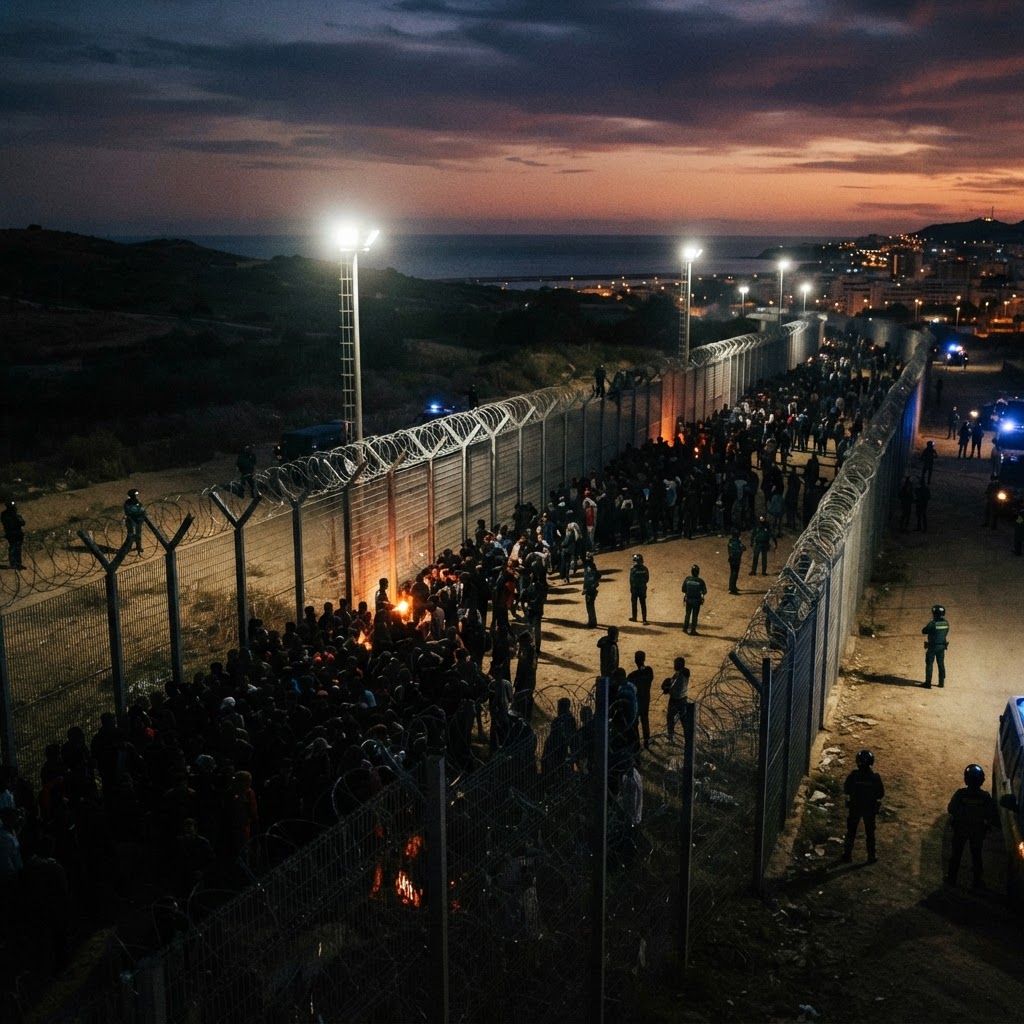
The recent mass migration event in the Spanish enclave of Ceuta has served as a catalyst for a significant shift in European political priorities. While the crisis initially overwhelmed local authorities, it has quickly evolved into a broader ideological battleground. Far-right political movements across the continent have successfully leveraged the chaotic scenes to amplify their anti-immigration agendas, effectively moving from the political fringes to the center of the European policy debate.
Critics and analysts observe that the response to the Ceuta crisis reflects a hardening of attitudes compared to the 2015 refugee influx. Rather than focusing on humanitarian aid, many European leaders are now prioritizing restrictive border policies and security-first rhetoric. This shift is largely driven by the pressure exerted by nationalist parties, which have framed the arrivals as a direct threat to national sovereignty and security.
Spain’s socialist government has found itself under intense scrutiny, particularly regarding its recent plans to regularize undocumented migrants. Hard-line figures, including Italy’s Prime Minister Giorgia Meloni, have characterized these policies as a dangerous pull factor that encourages illegal migration. In a move that has strained diplomatic relations, Italy even announced a temporary suspension of its Schengen agreement with Spain, citing security concerns stemming from the situation.
Despite the political firestorm, experts point out that the Ceuta enclave is not part of the Schengen zone, meaning migrants do not have automatic access to mainland Europe. Nevertheless, the narrative of an 'out-of-control' border has gained significant traction on social media and in political discourse. This instrumentalization of the crisis has forced even centrist politicians to adopt more defensive and stringent stances to avoid being perceived as weak on border control.
As the European Union struggles to maintain a unified front, the divide between member states continues to widen. The emergency meetings held in Brussels have highlighted deep-seated disagreements, with many nations signing letters that implicitly criticize Madrid’s approach. Ultimately, the events in Ceuta have demonstrated that far-right influence is now a primary driver in shaping how Europe manages its borders and perceives the ongoing challenges of migration.
RELATED DISPATCHES



Discussion (0)
No comments yet. Be the first to join the discussion.