Euro-Zone Economic Stability Masks Growing Divergence Between Germany and France
Strong German manufacturing performance balances out a deepening economic downturn in France, keeping the bloc's overall growth steady.
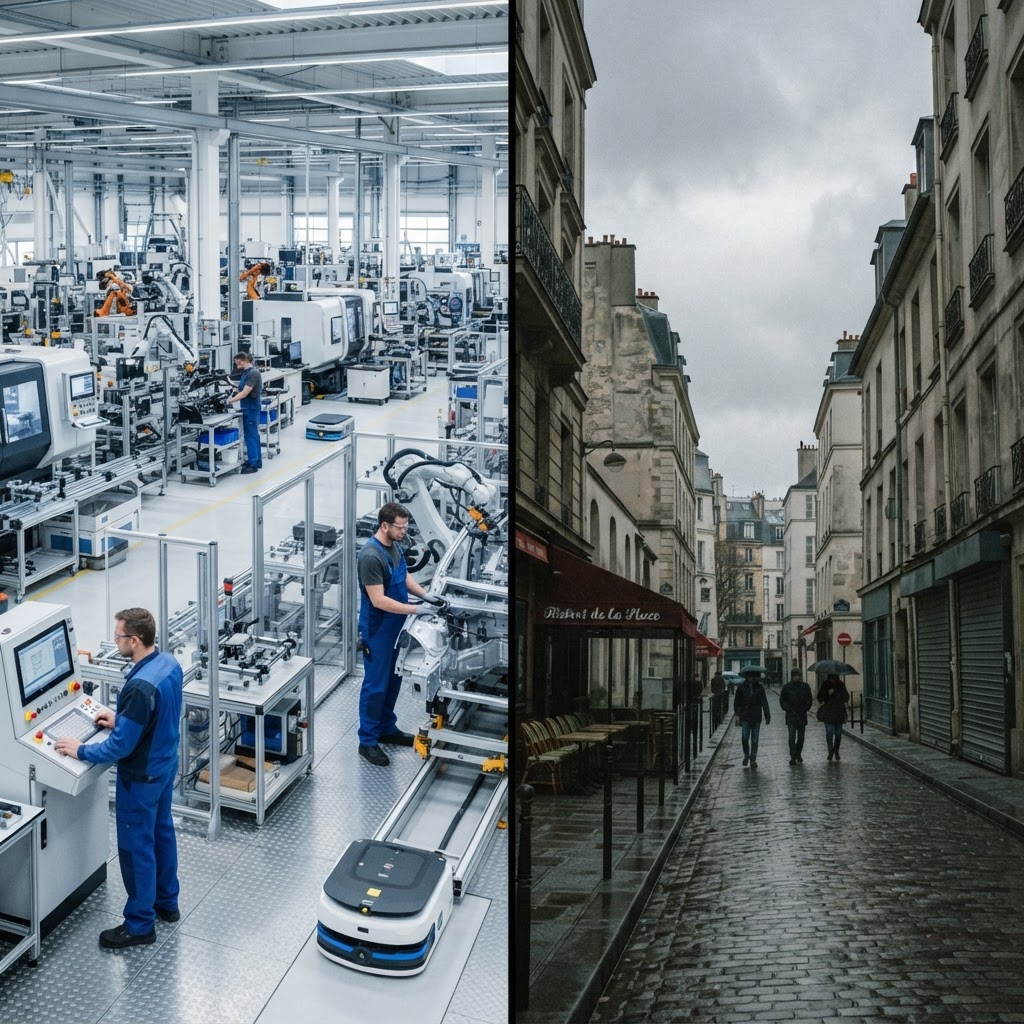
The euro area's private-sector activity maintained a consistent pace in November, with the composite Purchasing Managers’ Index (PMI) holding at 51.7. This figure, which remains above the 50-point threshold indicating expansion, suggests the region is on track for a quarterly growth rate of approximately 0.3%. However, this headline stability conceals a significant and widening performance gap between the bloc's two largest economies.
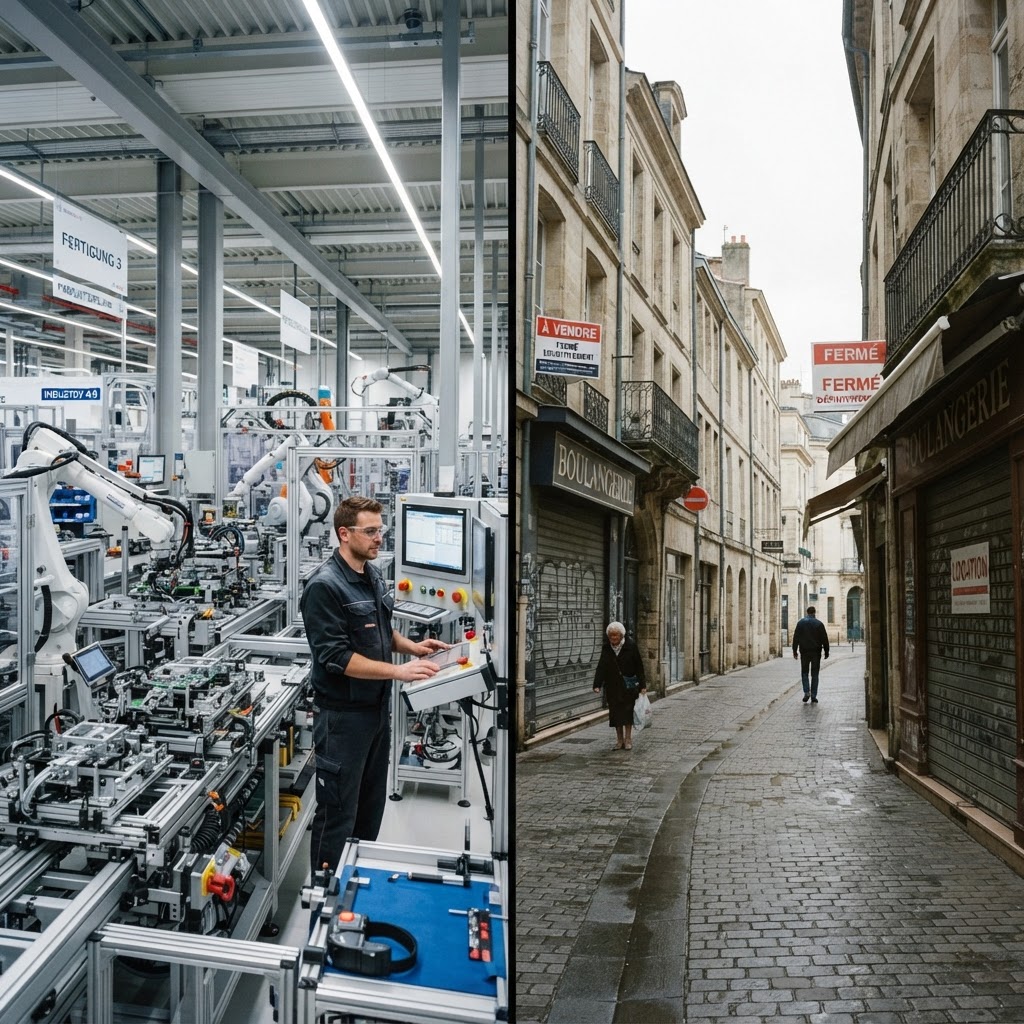
Germany has emerged as the primary engine of regional growth, reporting its strongest expansion in over four and a half years. Driven by a surge in manufacturing—particularly in the machinery, defense, and AI-related technology sectors—the German composite index climbed to 55.0. This industrial momentum has begun to spill over into domestic services, providing a robust buffer against broader economic headwinds.
In stark contrast, France is experiencing a deepening economic slump. Business activity in the country has contracted sharply, with sentiment hitting levels not seen since 2012, excluding the pandemic era. Analysts attribute this decline to heightened uncertainty surrounding the 2027 presidential election, ongoing budget concerns, and the lingering impact of social unrest, which have collectively stifled domestic demand.
This divergence represents the largest performance gap between the two nations in six years. While Germany benefits from increased investment, the rest of the euro zone is also seeing a general cooling of growth, marking the slowest expansion in that segment since May. Service providers across the region are particularly vulnerable, facing pressure from the high cost of living and the dampening effects of elevated interest rates.
Looking ahead, the persistent inflationary signals and steady headline growth may bolster arguments for the European Central Bank to consider further interest rate hikes in December. While lower oil prices have provided some relief, the uneven nature of the recovery complicates the economic outlook, as the bloc remains increasingly reliant on German industrial strength to offset weakness elsewhere.
RELATED DISPATCHES

Discussion (0)
No comments yet. Be the first to join the discussion.