EPA Reports No Lead Contamination in Iowa Water Following Army Detonation
Initial laboratory testing confirms that drinking water sources remain unaffected by the recent controlled destruction of chemical stockpiles.
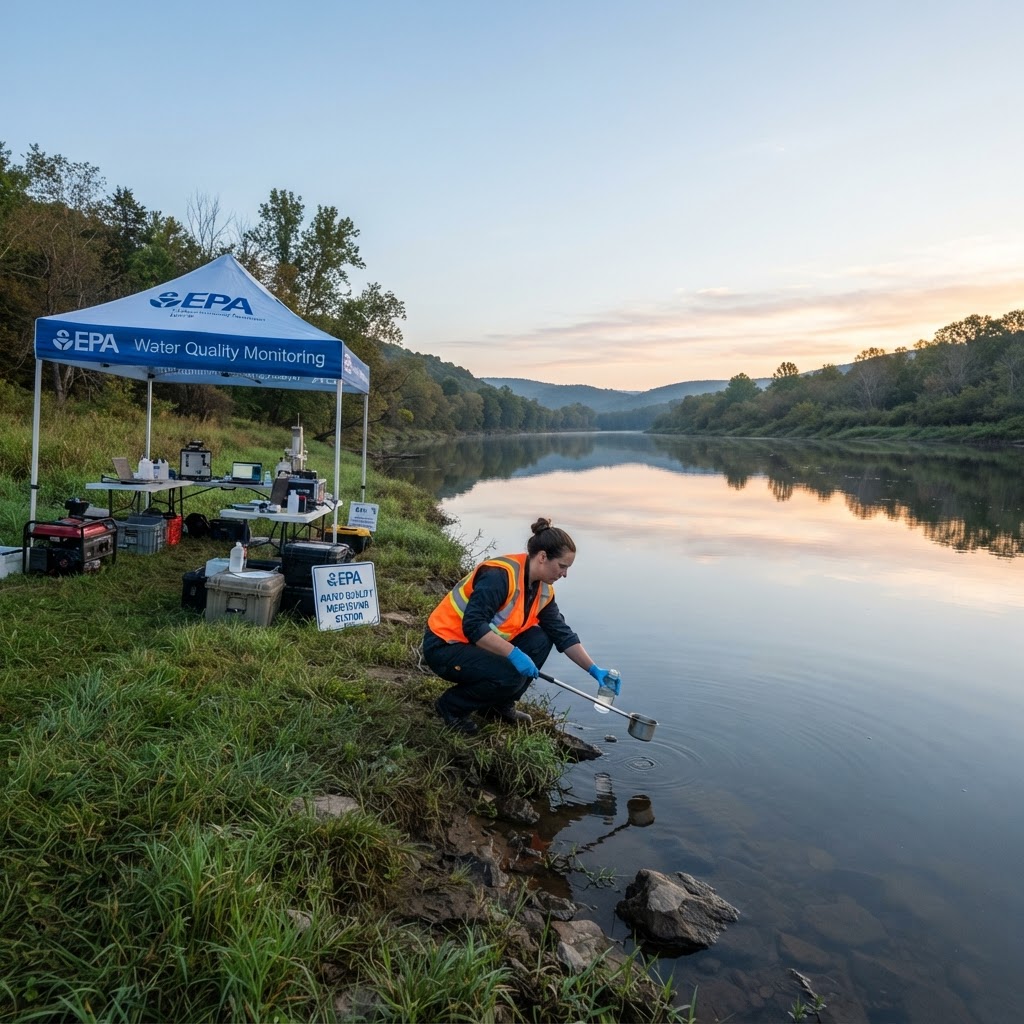
Following the U.S. Army’s controlled detonation of approximately five tons of degraded lead azide at the Iowa Army Ammunition Plant in Middletown, the Environmental Protection Agency (EPA) has released reassuring preliminary data. The agency confirmed that post-blast testing of 38 public water supply samples showed no detectable levels of lead, indicating that the event did not compromise local drinking water sources.
This announcement follows a massive environmental monitoring effort involving over 3,200 samples of air, soil, dust, and water. To ensure accuracy, the EPA established a comprehensive baseline by collecting over 1,600 samples prior to the November 25 explosion. While low levels of lead were identified in four water locations across Illinois and Missouri, officials clarified that these traces were present before the detonation and remain well below federal safety thresholds.
In addition to water quality, the EPA maintained a rigorous air monitoring operation for 30 consecutive hours following the blast. Using specialized Xact monitoring systems, the agency reported zero detectable airborne lead throughout the duration of the surveillance. These findings have provided significant relief to residents who expressed concerns regarding potential toxic fallout from the chemical disposal.
Despite these positive initial results, the EPA continues to process and validate a large volume of data. Teams are currently analyzing additional samples taken from residential tap water, soil, and dust from structures, schools, and public parks. The agency remains committed to transparent reporting and is updating its public data portal as new laboratory results are verified.
While environmental groups had previously sought to halt the operation through legal channels, the detonation proceeded as planned after an appeals court ruling. The EPA continues to coordinate with state authorities to determine if further testing is required, ensuring that the long-term safety of the Mississippi watershed and surrounding communities remains a top priority.
RELATED DISPATCHES



Discussion (0)
No comments yet. Be the first to join the discussion.