Deadly Missile Barrage Strikes Kyiv Amid Air Defense Shortages
A major Russian aerial assault on the Ukrainian capital has claimed 17 lives as the nation faces a critical depletion of interceptor missiles.
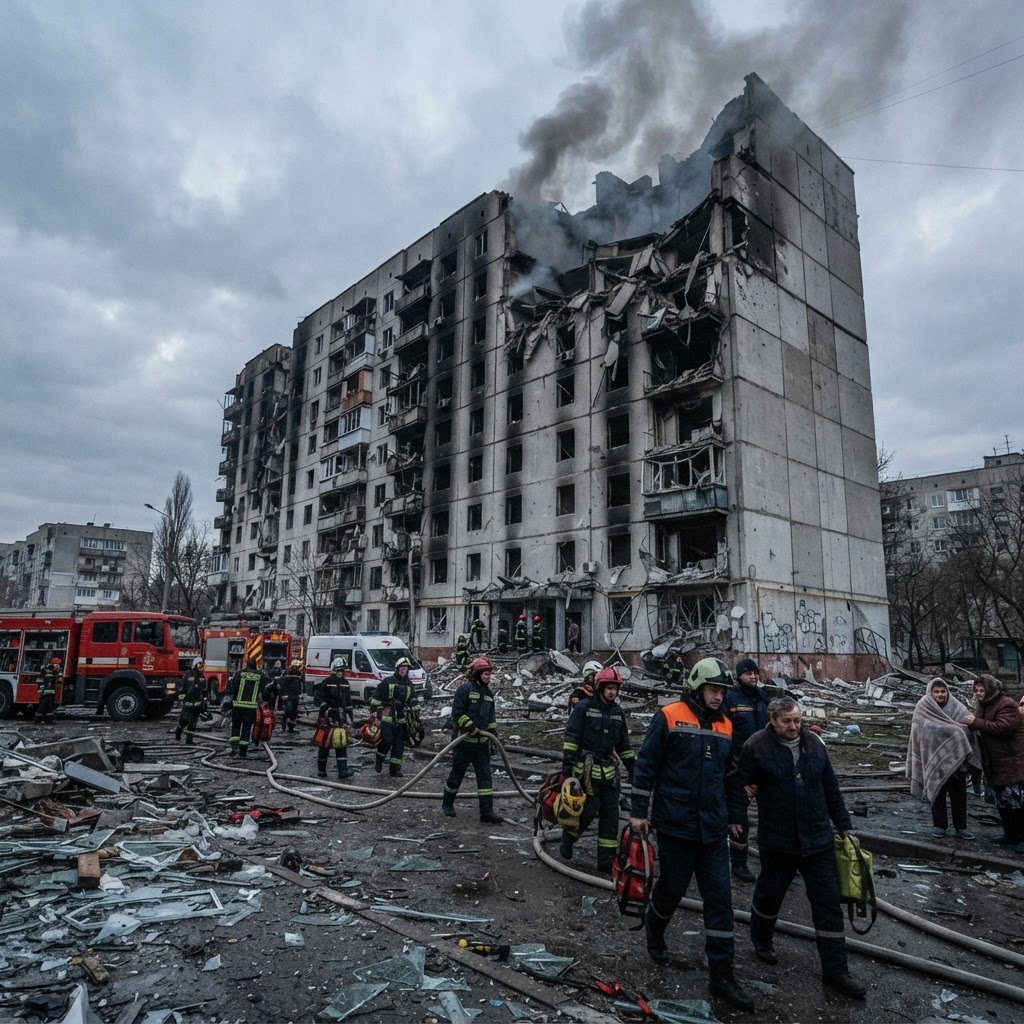
A devastating series of Russian missile strikes targeted Kyiv and its surrounding regions, resulting in at least 17 fatalities and leaving dozens of civilians wounded. The overnight assault, which spanned approximately two hours, underscored a growing vulnerability in Ukraine's security infrastructure as the country struggles to maintain its defensive capabilities against persistent aerial bombardment. Local officials confirmed that the attack caused significant destruction, including damage to residential buildings, a school, and a children's hospital.
Ukrainian leadership has highlighted that the severity of the casualties is directly linked to a critical shortage of interceptor missiles. The U.S.-made Patriot systems, which serve as the primary defense against ballistic threats, are currently hampered by a lack of necessary ammunition. President Volodymyr Zelenskyy noted that the supply of these defensive interceptors has plummeted to roughly one-third of the levels seen in the previous year, leaving the capital increasingly exposed to incoming fire.
While Ukrainian forces managed to neutralize a high percentage of incoming drones and cruise missiles, the failure to intercept ballistic projectiles remains a major tactical concern. Moscow appears to be intentionally exploiting these gaps in the air defense network, launching large-scale strikes that have become a frequent occurrence throughout the summer months. The inability to secure sufficient replenishment for these systems has left both military and civilian infrastructure at heightened risk.
In the aftermath of the tragedy, authorities in the Solomianskyi district—where the majority of the deaths occurred—have begun assessing the extensive damage to civilian housing. As the nation mourns the loss of life, the incident has intensified calls for international allies to expedite the delivery of air defense assets. Without a significant influx of interceptors, officials warn that the country will continue to face severe challenges in protecting its population from ongoing aerial campaigns.
RELATED DISPATCHES


Discussion (0)
No comments yet. Be the first to join the discussion.