China’s Market Turmoil Leaves Millions of Retail Investors Feeling Betrayed
A year that began with high hopes for a Chinese stock market recovery has ended in widespread disillusionment and significant financial losses for individual traders.
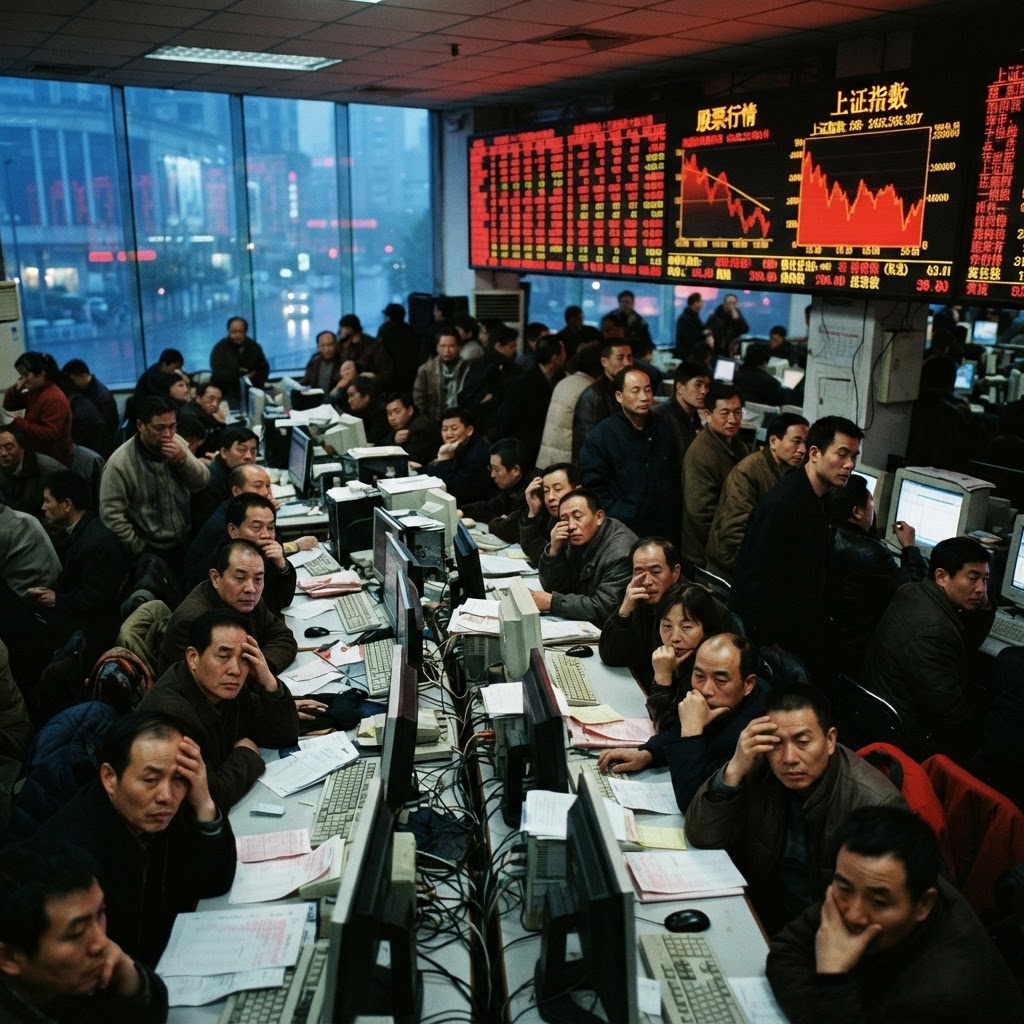
The landscape for China’s 250 million retail investors has shifted from cautious optimism to profound frustration as a massive market downturn continues to erode personal wealth. After a year marked by volatile swings and unfulfilled expectations, many individual traders feel they were misled by the promise of a sustained bull market. This sentiment follows a period where government stimulus pledges initially sparked a frenzy of buying, only to be met with subsequent sell-offs that left many participants counting their losses. Retail investors, who account for approximately 70% of share trading in China, have found themselves particularly vulnerable to these boom-and-bust cycles.
The market’s trajectory has been defined by a series of failed rallies. In late 2024, a wave of interest rate cuts and policy announcements briefly sent benchmark indices soaring, leading many to believe that a long-awaited recovery had finally arrived. However, the momentum quickly stalled as investors grew weary of waiting for more concrete, large-scale economic reforms. The resulting decline has been described by some market participants as a vote of no-confidence in the government's ability to stabilize the economy, with many choosing to exit their positions entirely rather than risk further exposure.
For many, the experience has been a painful reminder of the risks inherent in the Chinese equity market. Traders who entered the market during the brief September surge found their optimism evaporating within months as the lack of follow-through on policy implementation became apparent. This cycle of hope and disappointment has not only impacted individual portfolios but has also raised concerns about the broader implications for consumer confidence and wealth preservation in the world's second-largest economy.
As the market struggles to find a stable footing, the disconnect between official policy rhetoric and actual market performance remains a primary source of tension. While authorities have vowed to crack down on market irregularities and support capital stability, many investors remain unconvinced, viewing the current environment as increasingly unpredictable. With the market facing ongoing pressure from property sector woes and weak consumer sentiment, the path forward remains uncertain for those who once viewed the stock market as a reliable engine for growth.
RELATED DISPATCHES

Discussion (0)
No comments yet. Be the first to join the discussion.